Build a Productive Alfalfa Stand
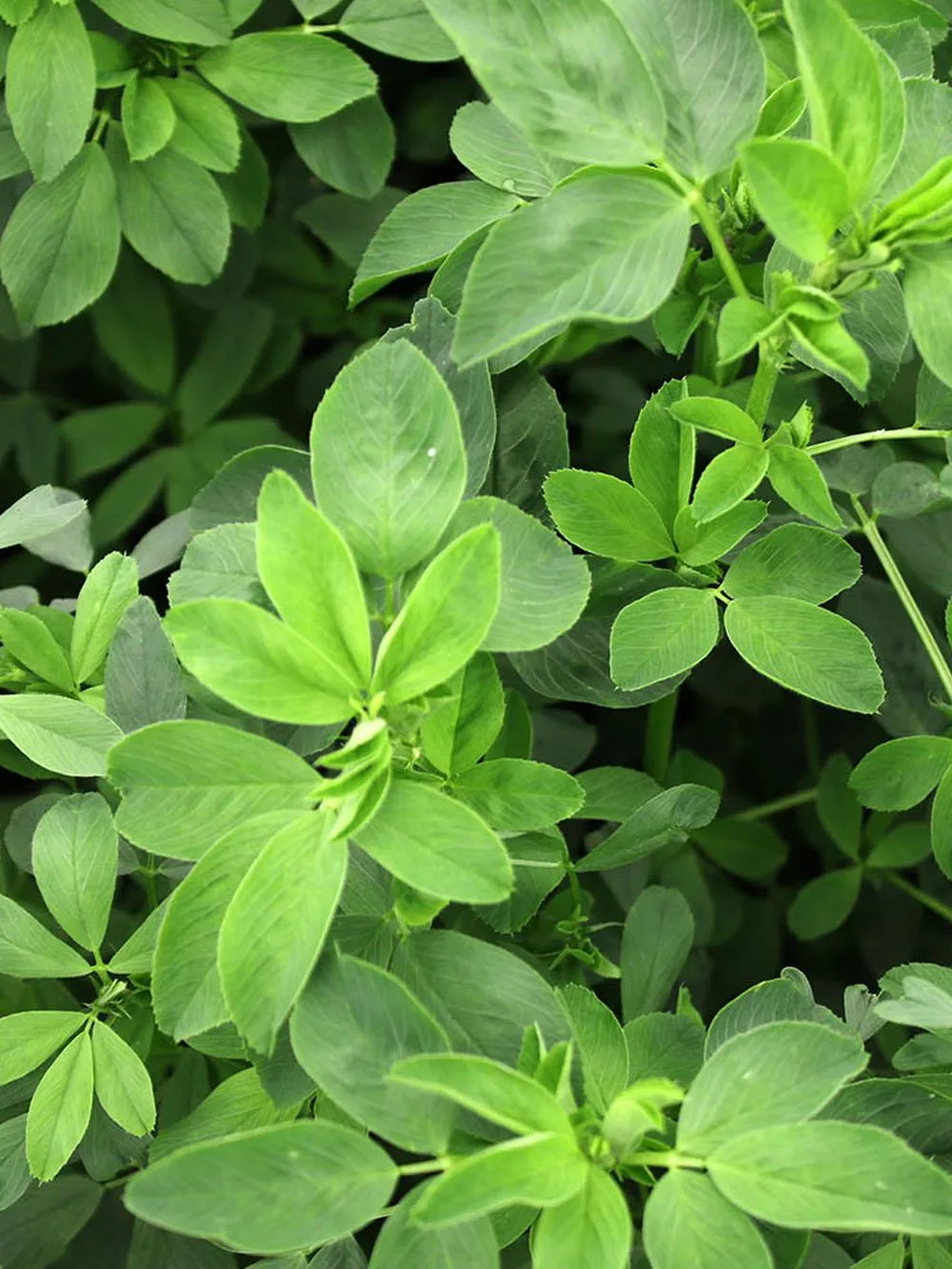
Alfalfa (Medicago sativa) is one of the most important perennial forage legumes grown in the United States. Its combination of yield, forage quality, regrowth, deep rooting, and nitrogen fixation makes it a valuable crop for commercial hay producers and livestock operations.
Unlike annual forage crops that must be replanted each season, a properly established alfalfa stand can remain productive across multiple growing seasons.
X-Force 5400 is an excellent option for:
- Commercial alfalfa hay
- Irrigated forage production
- Beef cattle forage
- Dairy-quality forage programs
- Horse hay
- Livestock operations
- Multi-cut hay systems
- Long-term forage rotations
Quality Forage Across Multiple Cuttings
Alfalfa’s ability to regrow following harvest allows producers to take multiple cuttings during a single growing season.
That makes X-Force 5400 useful for growers who want to maximize production from dedicated hay acres.
Hay Production Benefits
- Multiple harvest opportunities
- High leaf production
- Excellent protein potential
- Highly palatable forage
- Strong feed value
- Suitable for baled hay
- Useful across several livestock markets
Actual annual yield and number of cuttings will depend on irrigation, weather, fertility, stand health, cutting schedule, and length of the growing season.
More Than Just Tons Per Acre
The value of alfalfa comes from its ability to combine forage production with excellent nutritional quality.
When harvested at the proper stage, alfalfa can provide livestock with valuable:
- Crude protein
- Digestible fiber
- Energy
- Calcium
- Vitamins and minerals
- Highly palatable forage
This makes alfalfa valuable for several livestock sectors, including:
- Beef cattle
- Dairy cattle
- Horses
- Sheep
- Goats
Actual nutrient levels should always be determined with a forage analysis because cutting maturity, weather, leaf retention, fertility, and storage can substantially change feed value.
Put a Perennial Legume to Work
X-Force 5400 is alfalfa, meaning it belongs to the legume family and is capable of biological nitrogen fixation when properly nodulated with compatible rhizobia.
This allows established alfalfa plants to obtain much of their nitrogen through their relationship with nitrogen-fixing bacteria rather than depending on the same nitrogen fertilizer program required by grass forage crops.
Benefits of a Nitrogen-Fixing Perennial
- Fixes atmospheric nitrogen
- Reduces direct nitrogen fertilizer requirements
- Adds nitrogen-rich plant material
- Supports nutrient cycling
- Adds a legume to crop rotations
- Produces nitrogen-rich roots and residue
Proper inoculation, soil pH, fertility, and healthy root development are important for effective nodulation.
A Perennial Forage Option for High Plains Hay Producers
Alfalfa is an important forage crop across the irrigated Southern High Plains.
For growers around Lubbock, Amarillo, the Texas Panhandle, Eastern New Mexico, and the Oklahoma Panhandle, alfalfa can provide multiple hay cuttings throughout the growing season when adequate irrigation and fertility are available.
X-Force 5400 may fit operations producing:
- Commercial hay
- Horse-quality alfalfa
- Beef cattle forage
- Dairy forage
- Feedlot hay
- Retail alfalfa
- On-farm livestock feed
Why Alfalfa Fits the High Plains
- Long growing season
- Abundant sunlight
- Relatively dry haying conditions
- Established commercial hay markets
- Multiple-cutting potential
- Irrigated forage production systems
Water availability should be considered carefully before establishing new alfalfa acres, particularly where irrigation capacity is declining.
Establish the Stand Right the First Time
Successful alfalfa production begins with establishment.
Alfalfa has relatively small seed and should generally be planted shallow into a firm seedbed with excellent seed-to-soil contact.
General Planting Information
- Crop Type: Perennial legume
- Scientific Name: Medicago sativa
- Primary Uses: Hay and livestock forage
- Growth Habit: Perennial
- Planting Method: Drill or properly managed broadcast establishment
- Planting Depth: Generally ¼–½ inch
- Seedbed: Firm
- Nitrogen Fixation: Yes
- Best Fit: Productive forage and hay acres
Planting too deep is one of the easiest ways to reduce alfalfa establishment. The small seedlings have limited energy reserves and can struggle to emerge when placed excessively deep.
Match the Rate to Your Field & Seed Lot
Alfalfa seeding rates should be based on more than simply pounds per acre.
Important factors include:
- Seed coating
- Pure live seed
- Germination
- Drill calibration
- Seedbed condition
- Planting method
- Irrigated vs. dryland production
- Planting date
- Soil moisture
A general range commonly used for new drilled alfalfa stands is approximately 15–20 lb./acre, although the correct rate can vary considerably with seed coating and local conditions.
Broadcast establishment generally requires a higher rate than precision drilling.
Contact Jack Seed & Supply for an X-Force 5400 seeding recommendation based on your current seed lot, acreage, planting equipment, and field conditions.
What Does X-Force 5400 Bring to the Field?
Crop: Alfalfa
Variety: X-Force 5400
Scientific Name: Medicago sativa
Crop Type: Perennial legume
Primary Uses: Hay and livestock forage
Growth Habit: Perennial
Nitrogen Fixation: Excellent when effectively nodulated
Root System: Deep taproot
Forage Quality: Excellent potential
Hay Value: Excellent
Regrowth: Multiple harvest potential
Irrigated Production: Excellent fit
Dryland Potential: Dependent on rainfall, soil water storage, and local conditions
West Texas Fit: Strong potential for appropriately managed forage acres
Crop Rotation Value: Excellent
Soil Coverage: Long-term perennial cover
Best Fit: Dedicated hay and forage production
What is X-Force 5400 Alfalfa?
X-Force 5400 is a perennial alfalfa variety intended for hay and forage production.
Is X-Force 5400 good for hay?
Yes. Alfalfa is one of the premier hay crops available, offering multiple harvests and excellent potential forage quality under proper management.
Is X-Force 5400 good for West Texas?
It can fit appropriately managed West Texas alfalfa production, particularly where irrigation, soil conditions, fertility, and harvest management support productive perennial forage.
How much X-Force 5400 should I plant per acre?
A general drilled alfalfa range is approximately 15–20 lb./acre, but the correct rate should account for seed coating, germination, pure live seed, planting method, and local conditions.
How deep should X-Force 5400 be planted?
Alfalfa is generally planted approximately ¼–½ inch deep. Planting too deep can significantly reduce emergence.
Does X-Force 5400 fix nitrogen?
Yes. Alfalfa is a legume and can biologically fix atmospheric nitrogen when its roots are effectively nodulated with compatible rhizobia.
Does alfalfa need nitrogen fertilizer?
A healthy, effectively nodulated alfalfa stand generally obtains much of its nitrogen through biological fixation. Other nutrients—including phosphorus, potassium, sulfur, and micronutrients—can still limit production.
Can X-Force 5400 be grown dryland?
Alfalfa can be grown under some dryland systems, but success depends heavily on annual rainfall, stored soil moisture, soil depth, and production expectations. Irrigation provides considerably greater production consistency in the Southern High Plains.
How many times can X-Force 5400 be cut?
The number of harvests depends on the local growing season, irrigation, weather, stand condition, and cutting schedule. Multiple cuttings per season are one of alfalfa’s primary advantages.
How long can an alfalfa stand last?
Stand life varies considerably with variety, soil, pests, fertility, water, traffic, and cutting management. Productive stands can remain for multiple years when properly managed.

Reviews
There are no reviews yet.