A Cowpea Bred with Multiple Uses in Mind
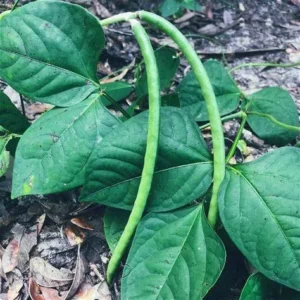
Ace was developed through the Texas A&M AgriLife Research Forage Legume Breeding Program at Overton and evaluated at AgriLife locations in both Overton and Vernon, Texas. It was released specifically for three major uses: forage and hay production, wildlife supplemental plantings, and cover cropping systems.
Ace Cowpea is an excellent option for:
- Summer cover crops
- Hay production
- Wildlife food plots
- Soil-building rotations
- Nitrogen-fixing cover crop programs
- Warm-season forage
- Multi-species summer blends
Add a Legume to Your Summer Rotation
Like other cowpeas, Ace is a warm-season annual legume capable of biological nitrogen fixation when properly inoculated and nodulated. Cowpeas are widely used as cover crops because they perform well during hot summer conditions while adding nitrogen-rich plant material to the system. USDA-NRCS describes cowpea generally as a quick-growing warm-season annual legume that provides both grazing value and nitrogen fixation.
Benefits
- Adds biological nitrogen fixation
- Builds crop diversity
- Produces nitrogen-rich biomass
- Helps improve nutrient cycling
- Adds organic material
- Works well with summer grasses
- Can reduce the amount of bare soil between cash crops
One of Ace Cowpea’s Biggest Advantages
Ace was intentionally selected for smaller seed size compared with traditional forage cowpeas. Texas A&M-developed information reports Ace at approximately 9,000 seeds per pound, compared with roughly 3,800 seeds per pound for Iron & Clay in the cited comparison. Despite its much smaller seed, Ace produced biomass yields similar to Iron & Clay in evaluations.
That smaller seed size can provide practical advantages for growers:
- More seeds per pound
- Lower pounds of seed needed for some planting systems
- Strong stand potential
- Easier inclusion in diverse seed blends
- Greater planting efficiency per bag
Why Choose Ace Cowpea Seed?
Texas A&M Genetics
Ace was developed by Texas A&M AgriLife Research and remains listed among the forage cultivars developed at the Overton breeding program.
Strong Forage Production
Ace was selected to maintain strong forage productivity while offering a smaller-seeded alternative to traditional forage cowpeas. Biomass yield was reported as similar to Iron & Clay in development evaluations.
Earlier Maturity
Ace flowers and matures earlier than very late-flowering Iron & Clay-type cowpeas, an important characteristic for Texas seed production and environments where fall freezes can arrive before late varieties mature.
Moderate Root-Knot Nematode Resistance
Ace has demonstrated moderate resistance to southern root-knot nematode, with relatively low galling and nematode reproduction compared with susceptible cowpea lines.
Wildlife Value
Ace was developed specifically for wildlife supplemental plantings and can provide leafy summer forage for white-tailed deer and other wildlife.
Excellent Cover Crop Option
Ace provides the benefits expected from a warm-season cowpea—rapid summer growth, legume nitrogen fixation, biomass, and soil coverage—while offering Texas-developed genetics.
Texas-Bred Summer Forage for Wildlife
Ace was developed in part for wildlife supplemental forage plantings. Cowpeas are highly attractive to white-tailed deer and can provide valuable leafy forage during summer when bucks are growing antlers and does are supporting fawns.
Texas A&M AgriLife’s wildlife forage recommendations specifically include Ace Cowpea as an option in deer forage mixtures. In one Texas A&M recommendation, Ace is planted at 30 lb./acre when used as the cowpea component of a fall-planted forage mixture.
Wildlife Uses
- White-tailed deer food plots
- Hunting properties
- Wildlife habitat programs
- Supplemental summer forage
- Custom wildlife blends
- Multi-season food plot programs
Because deer readily browse cowpeas, stand establishment and plot size should be considered where wildlife pressure is heavy.
Ace Cowpea Planting Recommendations
Ace should be planted after soil temperatures have warmed and the danger of frost has passed.
General Planting Information
- Crop Type: Warm-season annual legume
- Species: Vigna unguiculata
- Primary Uses: Forage, hay, wildlife, and cover crops
- Planting Season: Spring through summer
- Seeds per Pound: Approximately 9,000
- Inoculation: Use an appropriate cowpea inoculant where needed
- Growth Habit: Warm-season forage cowpea
Commercial planting guidance for Ace lists planting from approximately April through August, although ideal timing depends on location, moisture, and intended use.
Seeding Rate
Ace’s smaller seed size allows it to be planted at lower pound-per-acre rates than many larger-seeded cowpeas.
A commercial description based on the Texas A&M-developed variety information lists approximately:
- Rows: 10–15 lb./acre
- Broadcast: 15–20 lb./acre
Another Texas seed supplier lists approximately 10–15 lb./acre, reinforcing that exact rates should be matched to planting method and field objective.
For wildlife mixtures, Texas A&M has recommended 30 lb./acre of Ace when combined with oats and clover in specific Texas food plot systems.
Contact Jack Seed & Supply for an Ace Cowpea planting rate based on your acreage, planting method, and intended use.
What Does Ace Bring to the Field?
Crop Type: Warm-season annual legume
Scientific Name: Vigna unguiculata
Developer: Texas A&M AgriLife Research
Release: 2018
Primary Uses: Cover crop, forage, hay, and wildlife supplemental planting
Seed Size: Approximately 9,000 seeds/lb.
Nitrogen Fixation: Yes
Forage Production: Similar to Iron & Clay in development evaluations
Maturity: Earlier than Iron & Clay
Nematode Resistance: Moderate resistance to southern root-knot nematode
Wildlife Value: Excellent
Season: Warm season
Ace was specifically developed as a small-seeded forage cowpea for wildlife plantings, cover crops, and hay production, giving Texas growers a versatile alternative to older forage cowpea types.
A Smaller-Seeded Alternative
Ace and Iron & Clay are both valuable forage cowpeas, but they offer growers somewhat different characteristics.
Ace Cowpea
- Approximately 9,000 seeds/lb.
- Earlier maturity
- Biomass comparable to Iron & Clay in development trials
- Developed specifically by Texas A&M
- Moderate southern root-knot nematode resistance
- Excellent wildlife, forage, and cover crop use
Iron & Clay Cowpeas
- Approximately 3,800 seeds/lb. in the cited comparison
- Much larger seed
- Traditionally popular wildlife and forage cowpea
- Later flowering and maturity
- Strong biomass production
Texas A&M’s breeding program developed Ace partly to provide a smaller-seeded, earlier-maturing forage cowpea while maintaining the forage production producers expect from Iron & Clay-type material.
What is Ace Cowpea?
Ace is a small-seeded forage cowpea developed by Texas A&M AgriLife Research for wildlife supplemental plantings, cover crop systems, and hay production.
Who developed Ace Cowpea?
Ace was developed through the Texas A&M AgriLife Research Forage Legume Breeding Program at Overton, Texas.
How is Ace different from Iron & Clay Peas?
Ace has much smaller seed and earlier maturity while maintaining forage biomass comparable to Iron & Clay in development evaluations. The cited comparison reports approximately 9,000 seeds/lb. for Ace versus 3,800 seeds/lb. for Iron & Clay.
Is Ace Cowpea good for deer?
Yes. Ace was developed specifically in part for wildlife supplemental plantings, and Texas A&M includes it in forage mixtures for white-tailed deer.
Does Ace Cowpea fix nitrogen?
Yes. Ace is a cowpea and, when properly nodulated, functions as a nitrogen-fixing warm-season legume.
How much Ace Cowpea should I plant per acre?
Commercial guidance based on the variety lists approximately 10–15 lb./acre in rows and 15–20 lb./acre broadcast. Rates should be adjusted for mixtures, wildlife plantings, planting method, and local growing conditions.
Is Ace Cowpea resistant to nematodes?
Ace has shown moderate southern root-knot nematode resistance, with low galling and relatively low nematode reproduction compared with susceptible cowpea lines.

Reviews
There are no reviews yet.