Proven Forage for Texas Farms & Ranches
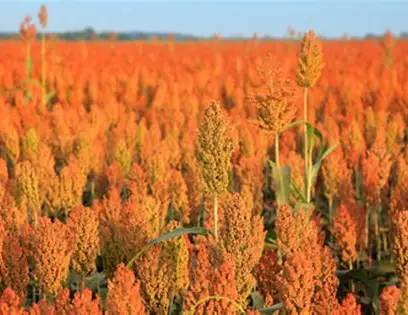
Red Top Cane isn’t a new forage crop. It has been planted across Texas for generations as a dependable source of summer forage. Historical Texas seed records describe Red Top Cane as being planted extensively across the state for fodder, while modern forage suppliers continue to offer it as Early Sumac or Red Top Cane.
Its combination of sweet stalks, forage production, drought tolerance, and palatability makes it useful for:
- Hay production
- Beef cattle forage
- Grazing
- Warm-season forage acres
- Dryland forage programs
- Wildlife mixtures
- Traditional forage systems
Sweet, Palatable Hay for Livestock
Hay production is one of Red Top Cane’s strongest uses.
Red Top Cane produces tall plants with sweet stalks and good leaf production. A current Texas High Plains technical sheet describes it as a sweet, juicy forage sorghum capable of meeting hay or grazing needs, with good ratings for leafiness, regrowth, standability, and drought tolerance.
Why Grow Red Top Cane for Hay?
- Excellent hay potential
- Sweet forage
- High palatability
- Good leaf production
- Strong summer growth
- Good drought tolerance
- Suitable for dryland production
- Can produce substantial forage tonnage
Harvest timing matters. Waiting too long can result in thicker, coarser stems and slower curing, while harvesting at the appropriate stage helps preserve forage quality and palatability.
Why Choose Red Top Cane Seed?
Open-Pollinated Forage Sorghum
Unlike many modern forage sorghum hybrids, Red Top Cane is an open-pollinated sorghum capable of producing seed.
Sweet, Juicy Stalks
Red Top Cane is known for its high-sugar, sweet stalks, contributing to its excellent livestock palatability.
Good Drought Tolerance
Its sorghum genetics give Red Top Cane good tolerance to hot, dry summer growing conditions. A Plainview, Texas technical sheet rates its drought tolerance highly.
Excellent Hay Crop
Red Top Cane can produce a large amount of forage for hay and remains a useful choice for cattle producers wanting traditional cane hay.
Good Regrowth Potential
Modern technical information rates Red Top Cane well for regrowth, although management, moisture, fertility, and harvest stage all influence recovery after cutting.
Versatile Forage Use
Red Top Cane can be managed for hay, grazing, and other forage uses depending on the operation.
A Forage Crop Built for Hot Summers
Red Top Cane is particularly relevant to West Texas and the Southern High Plains, where summer forage crops must contend with high temperatures and periods of limited rainfall.
A current Red Top Cane technical sheet from a seed company in Plainview, Texas describes the crop as an open-pollinated forage sorghum with good drought tolerance, leafiness, standability, and forage potential.
For West Texas producers, Red Top Cane can provide:
- Summer hay production
- Dryland forage
- Supplemental cattle forage
- Warm-season crop diversity
- An economical alternative to more specialized hybrids
Actual forage production will depend heavily on rainfall, irrigation, soil fertility, population, and planting date.
Red Top Cane Planting Recommendations
Red Top Cane is a warm-season crop and should be planted once soils have warmed and frost danger has passed.
General Planting Information
- Crop Type: Warm-season annual forage sorghum
- Type: Open pollinated
- Primary Uses: Hay and grazing
- Maturity: Approximately 100 days
- Plant Height: Approximately 6–8 feet
- Planting Season: Spring through early summer
- Sunlight: Full sun
- Drought Tolerance: Good
- Growth Habit: Tall forage sorghum
A Texas technical sheet reports an average plant height of approximately 6–8 feet, while another forage supplier describes a maturity of approximately 100 days and plants around 70–90 inches tall.
Match Population to Your Forage Goal
One thing worth being careful about with Red Top Cane is planting rate. Published recommendations vary considerably because seed size, planting method, moisture availability, and intended use all affect the appropriate pounds per acre.
One current forage supplier recommends approximately:
- Hay: 60–80 lb./acre
- Grazing: 40–50 lb./acre
Another current seed source recommends:
- Drilled: 50–60 lb./acre
- Rows: 25–40 lb./acre
- Planting Depth: approximately ¾–1¼ inches
A multi-year forage trial also demonstrates why planting strictly by pounds can be misleading: its Red Top Cane seed lot contained about 32,737 seeds/lb., and 19.4 lb./acre was required to reach that trial’s target of 500,000 live seeds per acre.
For West Texas, Jack Seed & Supply can help determine a rate based on seed lot, dryland vs. irrigated conditions, planting equipment, and whether you’re producing hay or grazing.
What Does Red Top Cane Bring to the Field?
Crop Type: Warm-season annual forage sorghum
Common Names: Red Top Cane, Early Sumac
Primary Uses: Hay and grazing
Pollination: Open pollinated
Maturity: Approximately 100 days
Typical Height: Approximately 6–8 feet
Forage Character: Sweet and juicy
Drought Tolerance: Good
Leafiness: Good
Standability: Good
Regrowth: Good
Hay Potential: Excellent
Grazing Potential: Good with appropriate management
Seed Production: Yes
Season: Warm season
Key Management Concerns: Prussic acid, nitrates, and curing thick stems
The combination of open-pollinated genetics, tall growth, sweet forage, and drought tolerance has kept Red Top Cane relevant even with the wide range of modern forage sorghum hybrids now available.
What is Red Top Cane?
Red Top Cane, also called Early Sumac, is an open-pollinated sweet forage sorghum traditionally grown for hay and grazing.
Is Red Top Cane good for hay?
Yes. Hay is one of its primary uses. Its sweet forage and good palatability make it a traditional cane-hay option for livestock.
Is Red Top Cane drought tolerant?
Yes. Red Top Cane has good drought tolerance and is well suited to warm-season forage production, although adequate moisture is still necessary for strong yield.
How tall does Red Top Cane grow?
Current technical information places average height around 6–8 feet, with another source reporting approximately 70–90 inches.
How long does Red Top Cane take to mature?
Approximately 100 days is a useful general maturity estimate, although temperature, planting date, moisture, and fertility can alter development.
How much Red Top Cane should I plant per acre?
Current recommendations vary. Examples include 50–60 lb./acre drilled from one supplier and 60–80 lb./acre for hay from another. Seed count and desired plant population are better guides than assuming one pound-per-acre rate applies to every seed lot and production system.
Can cattle graze Red Top Cane?
Yes, but Red Top Cane is a sorghum and should be managed accordingly. Prussic acid and nitrate accumulation can become concerns under certain environmental and plant-stress conditions.

Reviews
There are no reviews yet.