Well Suited to the High Plains & Rolling Plains
Black-Eyed Peas have a long history of commercial production in Texas. Texas A&M reports that black-eyes, cowpeas, and related southern peas are grown primarily in the High Plains and Rolling Plains, where they are used both as commercial crops and as flexible rotation options.
Texas growers have also used dry beans and peas as catch crops following storm-damaged cotton, giving producers another option when weather forces a change in the original crop plan.
Black-Eyed Peas are an excellent option for:
- Commercial dry pea production
- Fresh-market production
- Crop rotations
- Diversified farms
- Warm-season legume acres
- Catch-crop situations
- Small-acreage vegetable production
Add a Legume to Your Rotation
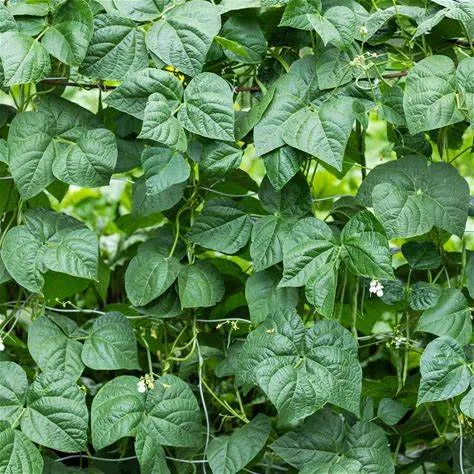
Black-Eyed Peas belong to the cowpea group, making them a warm-season annual legume capable of fixing atmospheric nitrogen when properly inoculated and nodulated.
That gives Black-Eyed Peas value beyond harvested peas. When incorporated into a crop rotation, the roots and crop residue contribute organic material while the legume biology can add nitrogen to the overall system.
Benefits
- Biological nitrogen fixation
- Adds diversity to crop rotations
- Produces nitrogen-rich residue
- Helps improve nutrient cycling
- Adds organic matter
- Provides a broadleaf break from grass crops
- Works well in diversified farming systems
Why Choose Black-Eyed Pea Seed?
Adapted to Texas Growing Conditions
Texas A&M lists southern peas as adapted statewide, with commercial production concentrated heavily in the High Plains and Rolling Plains.
Dryland Production Potential
Texas A&M notes that southern peas have dryland production potential, although water requirements and yield will still depend on rainfall, soil type, and growing conditions.
Good Rotation Crop
Black-Eyed Peas can provide a warm-season broadleaf break in rotations dominated by crops such as cotton, wheat, corn, and sorghum. Texas A&M specifically describes southern peas as a good rotation crop.
Flexible Crop Option
Commercial black-eyed pea acreage in Texas has historically shifted with weather and crop economics, making them a flexible option for diversified operations.
Marketable Dry Pea Crop
Black-eyed peas can be harvested for dry grain and marketed as a food crop. Texas A&M reports typical black-eye yields of approximately 1,500–2,000 pounds per acre under the production systems represented in its Texas crop guide.
Fits Diversified Farms
Recent NRCS coverage of a Texas High Plains operation highlights black-eyed peas as part of a diverse crop system alongside cotton, peanuts, melons, vineyards, livestock, and cover crops.
A Natural Fit for High Plains Crop Rotations
Black-Eyed Peas are particularly relevant for West Texas because the High Plains and Rolling Plains are major production regions for dry peas and cowpeas.
For growers in the Lubbock and Texas Panhandle region, Black-Eyed Peas can fit into rotations with:
- Cotton
- Wheat
- Grain Sorghum
- Corn
- Peanuts
- Other warm-season specialty crops
Their legume growth habit also gives growers a way to introduce a non-grass species into rotations that may otherwise be dominated by cereals or cotton.
Black-Eyed Pea Planting Recommendations
Black-Eyed Peas are a warm-season crop and should be planted after soils have warmed sufficiently for rapid germination and establishment.
Texas A&M’s statewide vegetable guidance recommends planting southern peas 2–10 weeks after the average frost-free date, depending on location and production system.
General Planting Information
- Crop Type: Warm-season annual legume
- Species: Cowpea / Southern Pea
- Primary Uses: Dry pea production, fresh market, crop rotation, and soil improvement
- Planting Season: Spring through summer
- Planting Depth: Approximately 2–3 inches in Texas A&M garden guidance
- Row Spacing: Approximately 24–36 inches
- Plant Spacing: Approximately 4–6 inches
- Soils: Performs well on sandy soils and can also grow on heavier loams
- Water Requirement: Texas A&M lists approximately 15–20 inches during the crop season, with dryland potential in suitable environments
Commercial field planting rates will vary by variety, seed size, row spacing, equipment, and whether the crop is being grown for harvested peas, cover cropping, or another objective.
Contact Jack Seed & Supply for a Black-Eyed Pea seeding recommendation based on your acreage and production goal.
What Do Black-Eyed Peas Bring to the Field?
Crop Type: Warm-season annual legume
Scientific Name: Vigna unguiculata
Crop Group: Southern Pea / Cowpea
Primary Uses: Dry pea production, fresh market, crop rotation, and soil improvement
Texas Adaptation: Statewide
Major Texas Production Areas: High Plains and Rolling Plains
Soil Preference: Sandy soils, with adaptation to heavier loams
Dryland Potential: Yes
Nitrogen Fixation: Yes, when properly nodulated
Typical Texas Black-Eye Yield: Approximately 1,500–2,000 lb./acre in Texas A&M’s crop guide
Season: Warm season
Market Uses: Dry peas, fresh shelled peas, local retail and wholesale
Texas A&M classifies Black-Eyed Peas among Texas’ important dry and southern pea crops and notes substantial historical acreage across the High Plains and Rolling Plains.
What Do Black-Eyed Peas Bring to the Field?
Crop Type: Warm-season annual legume
Scientific Name: Vigna unguiculata
Crop Group: Southern Pea / Cowpea
Primary Uses: Dry pea production, fresh market, crop rotation, and soil improvement
Texas Adaptation: Statewide
Major Texas Production Areas: High Plains and Rolling Plains
Soil Preference: Sandy soils, with adaptation to heavier loams
Dryland Potential: Yes
Nitrogen Fixation: Yes, when properly nodulated
Typical Texas Black-Eye Yield: Approximately 1,500–2,000 lb./acre in Texas A&M’s crop guide
Season: Warm season
Market Uses: Dry peas, fresh shelled peas, local retail and wholesale
Texas A&M classifies Black-Eyed Peas among Texas’ important dry and southern pea crops and notes substantial historical acreage across the High Plains and Rolling Plains.

Reviews
There are no reviews yet.