Three Proven Small Grains Working Together
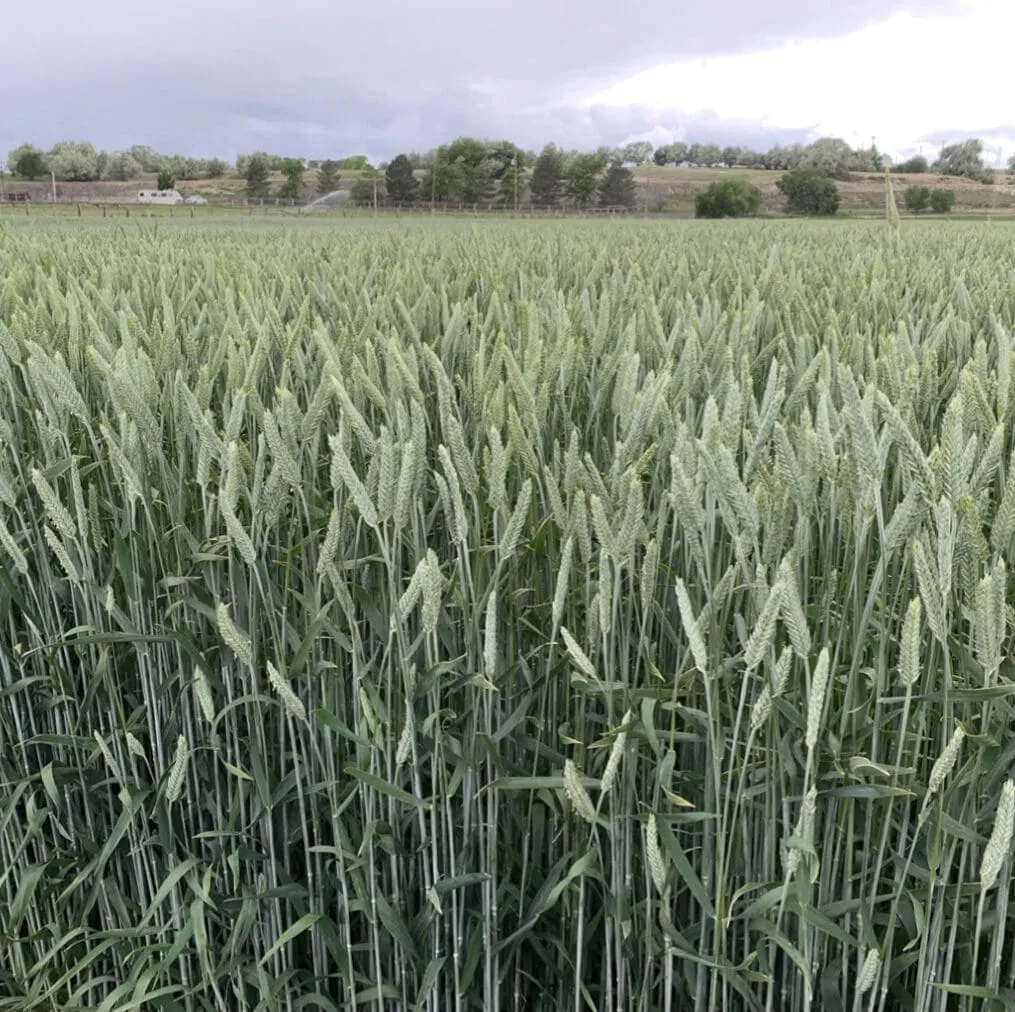
Green Chop 2 builds on the traditional wheat and triticale forage combination by adding barley to create a more diverse three-way blend.
The 40% wheat component provides a dependable base with good forage quality, palatability, tillering, and proven performance in Southern Great Plains winter forage systems.
The 40% triticale portion contributes vigorous growth and strong biomass production. Triticale is widely used for livestock forage because of its ability to produce substantial vegetative growth for grazing, hay, and silage.
The remaining 20% barley adds another layer of forage diversity. Barley is known for quick establishment, early growth, and excellent forage quality, helping Green Chop 2 develop a productive stand for livestock utilization.
Together, these three small grains create a blend designed to balance quality, tonnage, establishment, and seasonal forage production.
Built for Grazing, Hay, Silage & Green Chop
Green Chop 2 gives producers several options for utilizing their winter forage acres. It can be grazed during vegetative growth, harvested as hay, chopped for silage, or cut and fed fresh as green chop.
For grazing operations, the blend provides a diverse stand rather than relying on a single small-grain species. Differences in growth patterns between wheat, triticale, and barley can help create a broader forage production window as growing conditions change through the season.
For harvested forage, the strong biomass potential of triticale combines with wheat and barley to create a productive small-grain stand. Producers can adjust harvest timing according to whether forage quality or maximum tonnage is the primary objective.
This flexibility makes Green Chop 2 a strong fit for cattle operations wanting to get more value from their fall, winter, and spring forage acres.
Key Features
- Three-Grain Forage Blend – Combines wheat, triticale, and barley in one planting.
- Excellent Forage Potential – Developed for productive cool-season livestock forage.
- Strong Biomass Production – Triticale and wheat provide a strong foundation for total forage tonnage.
- Quick Establishment – Barley adds vigorous early growth to the blend.
- Excellent Grazing Potential – Provides palatable cool-season forage for cattle.
- Hay Production – Can be grown and mechanically harvested for dry forage.
- Silage Potential – Three productive small grains provide strong potential for ensiled forage.
- Green Chop Production – Can be mechanically harvested and fed fresh where appropriate.
- Extended Forage Opportunity – Different growth characteristics can help diversify seasonal forage production.
- Flexible Management – Graze it, hay it, chop it, or ensile it depending on the needs of the operation.
- West Texas Fit – Designed around small grains commonly used in High Plains forage systems.
Blend & Agronomic Profile
Blend Name: Green Chop 2
Crop Type: Cool-Season Small Grain Forage Blend
Composition: 40% Wheat / 40% Triticale / 20% Barley
Primary Use: Grazing / Hay / Silage / Green Chop
Planting Season: Fall
Growth Habit: Winter Annual
Establishment: Fast
Forage Potential: Excellent
Biomass Potential: Excellent
Grazing Potential: Excellent
Hay Potential: Very Good
Silage Potential: Excellent
Green Chop Potential: Excellent
Winter Hardiness: Very Good
Drought Adaptation: Good
Regional Fit: West Texas, Texas High Plains, Oklahoma Panhandle & Eastern New Mexico
Livestock Fit: Primarily cattle and other appropriate grazing livestock
Production System: Dryland or Irrigated
Agronomic characteristics will vary depending on the specific wheat, triticale, and barley varieties included in the blend. Planting date, fertility, moisture, temperature, grazing pressure, and harvest timing will also influence overall performance.
Recommended Planting
Green Chop 2 should generally be planted in the fall with enough time to establish a healthy root system and productive stand before prolonged cold weather.
Recommended Seeding Rate:
For drilled production, approximately 90–120 lb. per acre is a practical starting range. Final rates should be adjusted for seed size, germination, available moisture, planting date, and intended use.
Higher populations may be appropriate where grazing or maximum forage production is the primary objective. More conservative populations may be appropriate on moisture-limited dryland acres.
Planting Depth:
Generally plant approximately 1–2 inches deep. Adjust planting depth according to soil type and available moisture, with the goal of achieving uniform emergence across all three components.
For Grazing:
Plant toward the earlier portion of the locally appropriate fall small-grain window when fall forage is a priority. Allow plants to develop an adequate root system before beginning heavy grazing.
For Hay:
Manage for a thick, uniform stand and select harvest timing based on the desired balance between forage quality and total dry matter production.
For Silage:
Monitor crop maturity carefully. As small grains mature, forage tonnage generally increases while nutritional characteristics change. Harvest timing should match the livestock ration and forage-quality goals of the operation.
Fertility:
Use a current soil test whenever possible. Fertility should reflect available moisture, expected forage production, grazing pressure, and whether forage will be removed through mechanical harvest.
Green Chop 2 FAQ
What is in Green Chop 2?
Green Chop 2 contains 40% wheat, 40% triticale, and 20% barley.
What is Green Chop 2 used for?
Green Chop 2 is designed primarily for grazing, hay, silage, and green chop production.
Why add barley to a wheat and triticale blend?
Barley provides quick establishment and productive early forage growth. It complements the dependable forage characteristics of wheat and the biomass potential of triticale.
Is Green Chop 2 good for cattle grazing?
Yes. Wheat, triticale, and barley are all used as cool-season cattle forage. Combining them creates a diverse stand with strong grazing potential.
Can Green Chop 2 be used for hay?
Yes. Green Chop 2 can be grown for hay. Harvest timing should be selected according to the desired balance between forage quality and tonnage.
Can Green Chop 2 be chopped for silage?
Yes. Silage is one of the primary potential uses for Green Chop 2. The combination of wheat, triticale, and barley can produce substantial cool-season biomass under good growing conditions.
Can Green Chop 2 be fed as green chop?
Yes. The blend can be mechanically harvested while green and fed fresh as part of an appropriately managed livestock feeding program.
What is the difference between Green Chop and Green Chop 2?
Green Chop is a two-way blend containing 50% beardless wheat and 50% beardless triticale. Green Chop 2 adds barley and contains 40% wheat, 40% triticale, and 20% barley, creating a more diverse three-grain forage blend.
How much Green Chop 2 should I plant per acre?
Approximately 90–120 lb. per acre is a practical starting range for drilled production. Adjust the rate according to moisture, planting date, seed size, germination, and forage goals.
How deep should Green Chop 2 be planted?
Approximately 1–2 inches deep is appropriate under many conditions. Seed should be placed into adequate moisture whenever possible.
When should I plant Green Chop 2?
Green Chop 2 is typically fall planted. Plant earlier when fall grazing is a major objective and within the normal regional small-grain window when the primary goal is spring hay or silage production.
Where can I buy Green Chop 2 seed?
Contact Jack Seed & Supply for Green Chop 2 availability and help developing a planting plan for grazing, hay, silage, or green chop production.

Reviews
There are no reviews yet.