Dependable Wheat with Added Forage Diversity
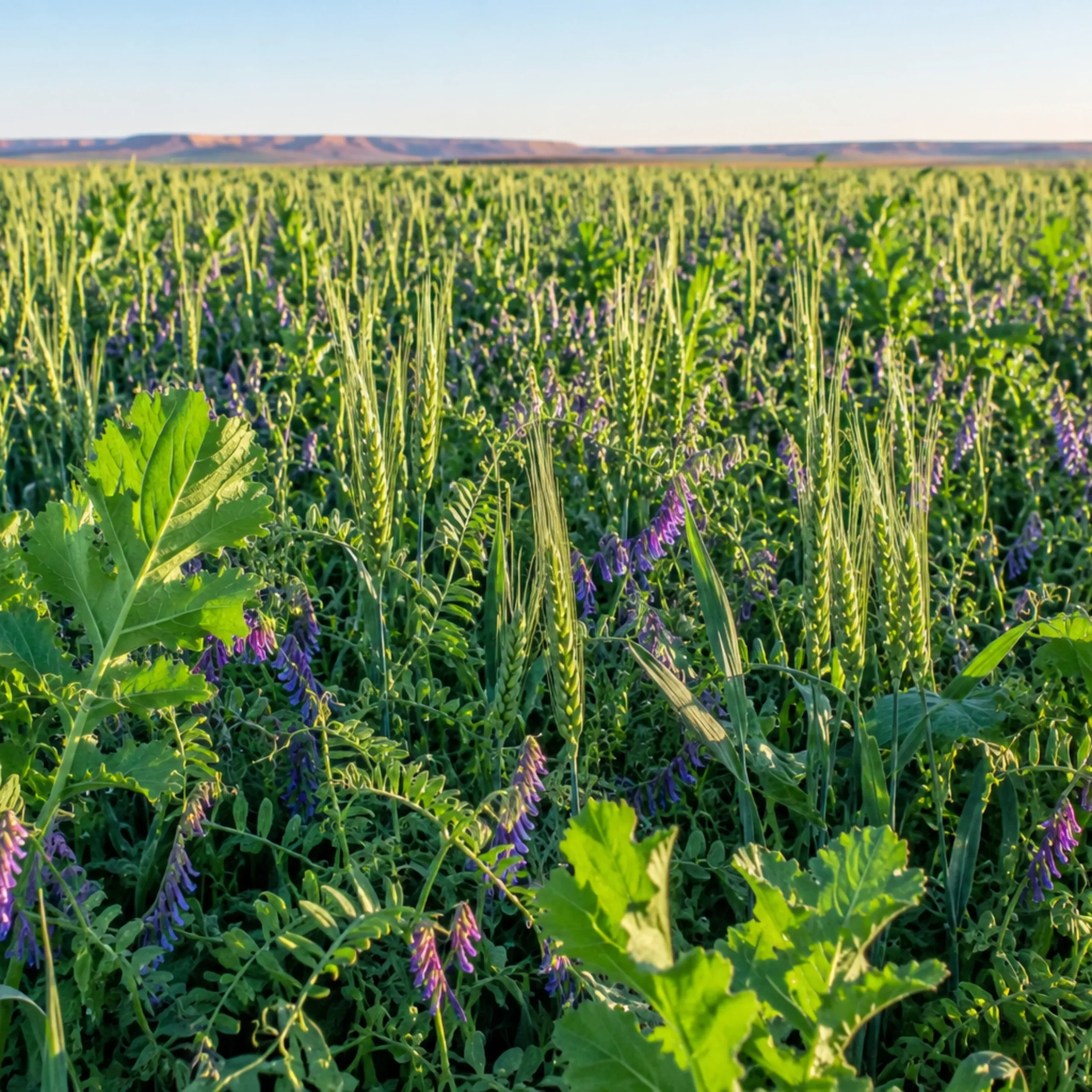
Fall Blend 2 is designed for producers who want the dependability and forage production of a traditional wheat pasture while adding the benefits of multiple cool-season species.
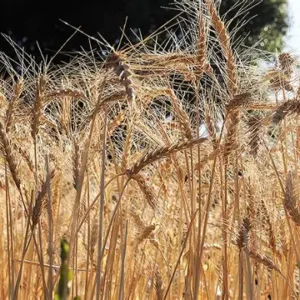
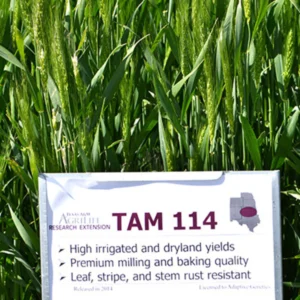
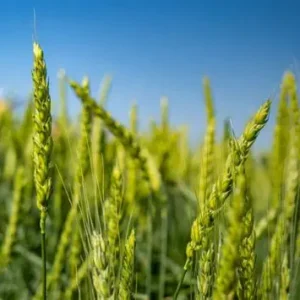
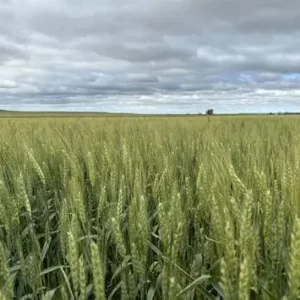
At 91% of the blend, wheat forms the foundation of the stand. It provides reliable establishment, tillering, ground cover, and fall through spring forage production. Wheat’s fibrous root system also helps hold soil in place and maintain living roots during the cool season.
The remaining 9% brings three additional components into the field. Radish and turnips add fast-growing brassicas with highly palatable leafy forage, while hairy vetch introduces a winter annual legume capable of biological nitrogen fixation when properly inoculated and nodulated.
The result is a wheat-dominant blend that maintains the familiarity of winter wheat while providing more diversity than a straight wheat stand.
Built for Winter Grazing & Cover
Fall Blend 2 can fit both livestock and cropping operations. For cattle producers, the wheat provides the primary forage base while radish, turnips, and hairy vetch add different forage types throughout the stand.
The brassicas can establish quickly under favorable fall conditions and produce highly digestible leaves that livestock readily utilize. Turnips may also develop an edible bulb that can be grazed as animals work through the stand.
Below ground, the mix creates several different root structures. Wheat produces a dense fibrous root system, hairy vetch contributes a legume root system, and the brassicas develop larger taproots.
This diversity makes Fall Blend 2 useful for producers who want to combine winter grazing, soil cover, crop diversity, and living roots in a single planting.
Blend & Agronomic Profile
Blend Name: Fall Blend 2
Crop Type: Cool-Season Forage & Cover Crop Blend
Composition: 91% Wheat / 3% Radish / 3% Hairy Vetch / 3% Turnips
Crop Diversity: Grass / Legume / Brassicas
Primary Use: Grazing / Forage / Cover Crop
Planting Season: Late Summer to Fall
Growth Habit: Cool-Season Annual Blend
Forage Potential: Excellent
Grazing Potential: Excellent
Ground Cover: Excellent
Root Diversity: Excellent
Nitrogen Fixation Potential: Yes – Hairy Vetch
Soil-Building Potential: Very Good
Winter Hardiness: Very Good
Drought Adaptation: Good
Regional Fit: West Texas, Texas High Plains, Oklahoma Panhandle & Eastern New Mexico
Production System: Dryland or Irrigated
Blend percentages are by seed weight. Because wheat seed is much larger than brassica seed, the percentage of individual plants in an established stand will not necessarily match the blend percentages by weight.
Recommended Planting
Fall Blend 2 should be planted early enough in the fall for wheat, vetch, radish, and turnips to establish before prolonged freezing conditions.
Recommended Seeding Rate:
Approximately 70–100 lb. per acre drilled is a practical starting range. Adjust the final rate according to planting date, seed size, germination, available moisture, field conditions, and intended use.
Higher rates may be appropriate for intensive grazing or higher-moisture environments, while dryland acres should be matched to realistic available moisture.
Planting Depth:
Because Fall Blend 2 contains both large wheat seed and much smaller brassica seed, planting depth is a compromise. Generally target approximately ½–1 inch when drilling the complete blend together. Good seed-to-soil contact is important.
Avoid unnecessarily deep planting, which can reduce emergence of the radish and turnip components.
For Grazing:
Plant toward the earlier portion of the locally appropriate fall planting window when fall forage is a major goal. Allow plants to establish sufficient root systems and top growth before introducing livestock.
For Cover Crop Use:
Plant early enough to establish meaningful biomass and root development before winter. Termination timing should account for the following crop and available soil moisture.
Fertility:
Base fertility on a current soil test and realistic production goals. Excessive nitrogen can encourage wheat growth at the expense of hairy vetch and other components.
Inoculation:
Hairy vetch should be inoculated with the appropriate Rhizobium inoculant when compatible bacteria are not already established in the field.
Fall Blend 2 FAQ
What is in Fall Blend 2?
Fall Blend 2 contains 91% wheat, 3% radish, 3% hairy vetch, and 3% turnips by seed weight.
How is Fall Blend 2 different from Fall Blend?
Fall Blend is a 70% wheat, 25% Austrian winter pea, and 5% daikon radish mixture. Fall Blend 2 uses a heavier wheat base and adds hairy vetch, radish, and turnips, making it a wheat-focused four-way forage and cover crop blend.
Is Fall Blend 2 good for cattle grazing?
Yes. Wheat provides the primary grazing base, while radish, hairy vetch, and turnips add additional palatable cool-season forage.
Why is Fall Blend 2 mostly wheat?
The 91% wheat base keeps the blend focused on dependable cool-season forage and grazing while the lower-rate companion crops add plant, forage, and root diversity.
What does hairy vetch add to the blend?
Hairy vetch adds a legume component that provides forage and can biologically fix atmospheric nitrogen when properly inoculated and nodulated.
Why are radish and turnips included?
Radish and turnips provide highly palatable brassica forage and different root structures than wheat. They help increase both above- and below-ground diversity.
Can livestock eat the turnips and radishes?
Yes. Livestock can graze the leafy tops, and they may also consume portions of the roots or bulbs. Brassica-heavy forage should be introduced gradually as part of a properly managed grazing program.
Is Fall Blend 2 a cover crop?
Yes. Fall Blend 2 can function as both a livestock forage and a cool-season cover crop, providing living roots, ground cover, and increased crop diversity.
Can Fall Blend 2 be planted dryland?
Yes, but forage production and stand composition will depend heavily on stored soil moisture and seasonal rainfall. Seeding rates and inputs should be adjusted for realistic dryland conditions.
How much Fall Blend 2 should I plant per acre?
Approximately 70–100 lb. per acre drilled is a practical starting range. Adjust according to available moisture, planting date, germination, field conditions, and intended use.
How deep should Fall Blend 2 be planted?
When all components are drilled together, approximately ½–1 inch is a useful target. Avoid excessive depth because the smaller radish and turnip seed may struggle to emerge when planted too deeply.
When should I plant Fall Blend 2?
Fall Blend 2 is typically planted in late summer through fall. Earlier planting is generally preferred when maximizing fall forage and brassica growth is an important objective.
Where can I buy Fall Blend 2 seed?
Contact Jack Seed & Supply for Fall Blend 2 availability and help developing a planting plan for winter grazing, forage production, or cover crop use.

Reviews
There are no reviews yet.