Proven Performance for West Texas Wheat Acres
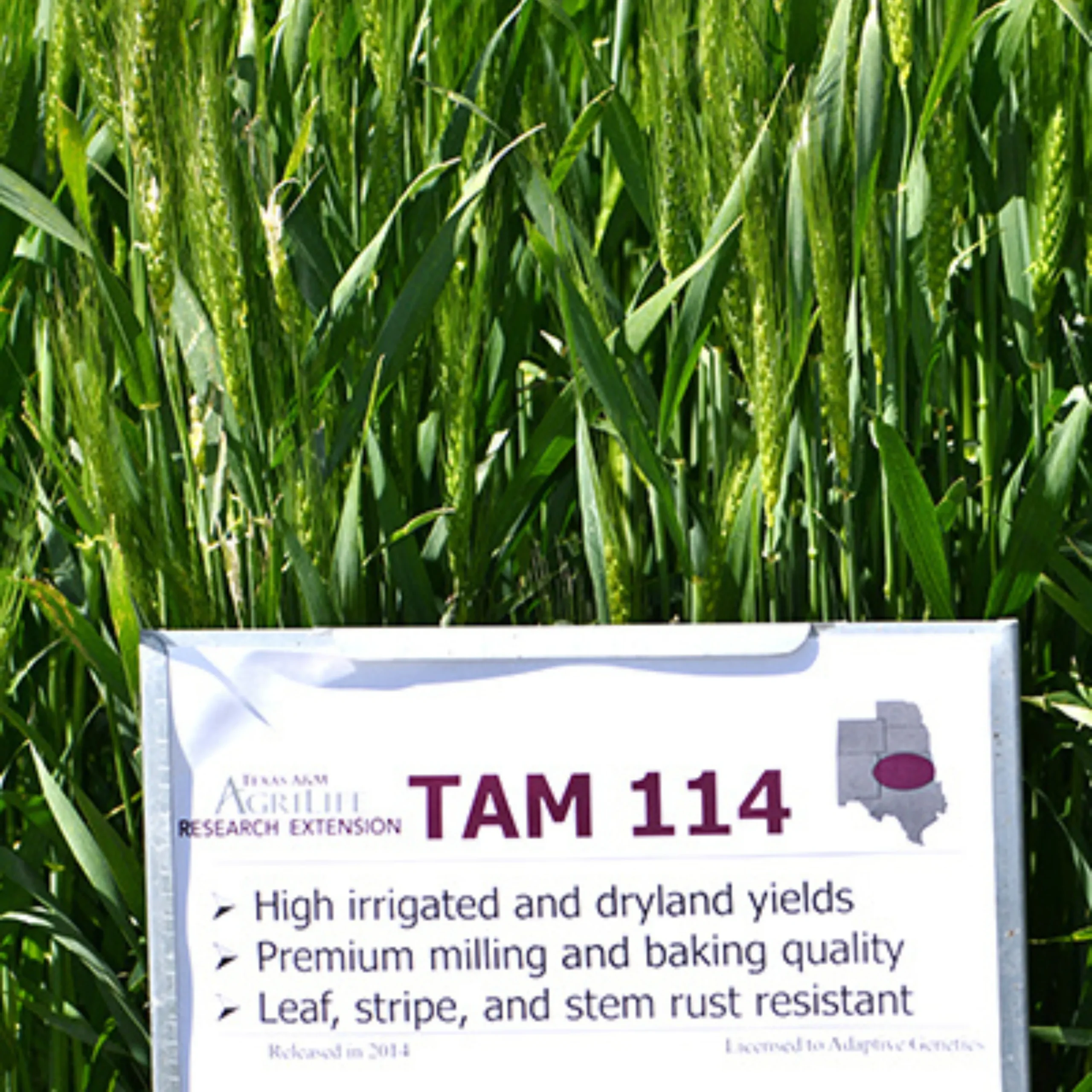
TAM 114 was developed by Texas A&M AgriLife Research and released as a hard red winter wheat variety with strong adaptation to Texas and the Southern Great Plains. The variety has built a reputation as a dependable option for producers who need wheat capable of handling the variable moisture, temperatures, and production systems common across West Texas.
One of TAM 114’s strengths is its ability to fit a wide range of production environments. It can be considered for irrigated, limited-irrigation, and dryland wheat acres, allowing growers to use the variety across different fields within the same operation.
TAM 114 also brings good yield potential and grain quality to the table. Its combination of regional adaptation and agronomic performance has helped make it a familiar wheat variety throughout the Texas High Plains.
Grain Production with Dual-Purpose Flexibility
TAM 114 is well suited for producers who want more flexibility from their wheat crop. In addition to grain production, it has been widely used as a dual-purpose variety where wheat is established early enough to provide fall and winter forage before being carried through for grain.
This makes TAM 114 especially attractive for cattle and wheat operations where grazing value can be an important part of the overall return from an acre. Producers can manage the crop for grain only or incorporate grazing depending on planting date, moisture availability, stocking pressure, and their goals for the field.
TAM 114 also has good drought and heat adaptation, characteristics that are particularly valuable in the Texas High Plains. While no wheat variety eliminates weather risk, TAM 114 provides growers with a proven option for environments where moisture can become limited during the growing season.
Agronomic Profile
Crop Type: Hard Red Winter Wheat
Developer: Texas A&M AgriLife Research
Primary Use: Grain / Dual-Purpose
Regional Fit: Texas High Plains, West Texas & Southern Great Plains
Water Regime: Irrigated, Limited Irrigation & Dryland
Maturity: Medium
Plant Height: Medium
Straw Strength: Good
Yield Potential: Good to Very Good
Test Weight: Good
Drought Adaptation: Good
Heat Adaptation: Good
Grazing Potential: Very Good
Disease Management: Continue scouting for rusts, wheat streak mosaic virus, and other locally important wheat diseases.
Disease reactions can change as pathogen populations and environmental conditions change. Producers should use current Texas A&M AgriLife disease ratings when making variety and fungicide-management decisions.
Recommended Planting
TAM 114 can be planted for grain-only production or managed as a dual-purpose wheat. Seeding rate and planting date should be adjusted according to the intended use of the field, available moisture, irrigation capacity, seed size, germination, and expected grazing pressure.
Grain-Only Production:
Plant within the locally recommended grain-production window. Seeding rates should be adjusted according to moisture availability and yield potential, with dryland fields generally requiring a more conservative population than highly productive irrigated acres.
Dual-Purpose / Grazing:
Planting earlier can help establish additional fall forage when grazing is a major objective. Dual-purpose acres may also benefit from increased seeding rates to establish more plants and compensate for grazing pressure.
Planting Depth:
Approximately 1–2 inches is a practical target under many High Plains conditions. Adjust depth according to soil texture and the location of adequate soil moisture. Avoid planting unnecessarily deep when good moisture is available closer to the surface.
Fertility:
Use a current soil test to develop a fertility program. Nitrogen requirements should account for expected grain yield, residual soil nitrogen, irrigation or rainfall potential, and forage removal when the crop will be grazed.
Management Tip:
For dryland production, maintaining an appropriate plant population can be more important than maximizing seeding rate. Match the stand to the amount of moisture the field can realistically support.
TAM 114 Wheat FAQ
What type of wheat is TAM 114?
TAM 114 is a hard red winter wheat variety developed by Texas A&M AgriLife Research for production in Texas and the Southern Great Plains.
Is TAM 114 good for West Texas?
Yes. TAM 114 has a strong history of production across the Texas High Plains and is adapted to the environmental conditions common throughout West Texas.
Can TAM 114 be planted dryland?
Yes. TAM 114 can be considered for dryland production and is known for good drought and heat adaptation. Seeding rate and fertility should be adjusted to realistic moisture and yield expectations.
Is TAM 114 good under irrigation?
Yes. TAM 114 can also perform well under irrigated production. Growers should compare it with newer varieties using current local trial results when selecting wheat for high-input irrigated acres.
Can TAM 114 be grazed?
Yes. TAM 114 has good dual-purpose potential and can be used for fall and winter grazing before being carried through for grain when properly managed.
Is TAM 114 drought tolerant?
TAM 114 is known for good drought adaptation, making it a useful option for the moisture variability common across the Texas High Plains. Drought tolerance does not eliminate yield loss during severe moisture stress.
How deep should TAM 114 be planted?
A planting depth of approximately 1–2 inches is appropriate under many conditions. Adjust planting depth to reach adequate soil moisture while avoiding unnecessarily deep placement.
When should I plant TAM 114 wheat?
Planting time depends on whether the field will be managed strictly for grain or for grazing and grain. Dual-purpose wheat is typically planted earlier to establish fall forage, while grain-only wheat can be planted during the normal regional wheat planting window.
Is TAM 114 better for grain or grazing?
TAM 114 can work for both. Its flexibility is one of its advantages for High Plains producers. The best management approach depends on whether grain yield, forage production, or a combination of the two is the primary goal.
Where can I buy TAM 114 wheat seed?
Contact Jack Seed & Supply for TAM 114 wheat seed availability and help comparing TAM 114 with other wheat varieties for dryland, irrigated, grain-only, or dual-purpose production.
Reviews
There are no reviews yet.