Add More Function to Your Winter Acres
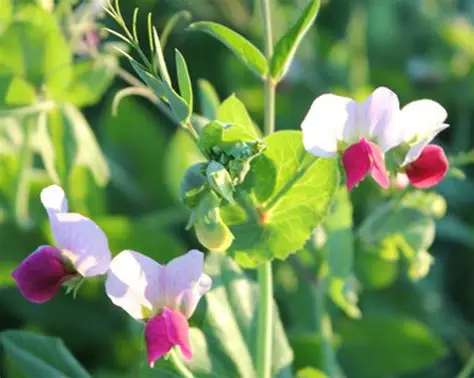
Winter Peas can serve several roles in one planting. They add a legume to the rotation, provide cool-season forage, contribute nitrogen-rich residue, and work well as part of a diverse cover crop blend.
Texas A&M notes that cool-season legumes are used in Texas for seed, forage, hay, cover crops, and green manure, with biological nitrogen fixation being one of their major agronomic benefits.
Winter Peas are an excellent option for:
- Cool-season cover crops
- Grazing systems
- Green manure
- Nitrogen-fixing rotations
- Soil-building programs
- Forage mixtures
- Small-grain blends
- Spring biomass production
Put a Legume to Work for Your Soil
Like other true legumes, Winter Peas can form a symbiotic relationship with rhizobia bacteria and fix atmospheric nitrogen when properly inoculated and nodulated.
That nitrogen is incorporated into the plant and can become part of the cropping system through residue breakdown, grazing return, or termination.
Texas A&M emphasizes that biological nitrogen fixation is a key reason producers include cool-season legumes in agronomic systems.
Benefits
- Fixes atmospheric nitrogen
- Adds nitrogen-rich biomass
- Improves crop diversity
- Supports nutrient cycling
- Complements cereal cover crops
- Can reduce dependence on purchased nitrogen in some systems
- Adds organic material
Quality Cool-Season Feed
Winter Peas can provide valuable forage during the cool season, especially when planted with small grains.
Their broadleaf growth and legume protein complement grasses such as wheat, rye, oats, and triticale, creating a more diverse forage mixture than a straight small-grain stand.
Texas A&M recognizes cool-season annual pastures as an important source of high-quality forage for cattle, sheep, and goats when warm-season pastures are dormant.
Grazing Benefits
- Adds a legume component to winter pasture
- Improves forage diversity
- Provides quality cool-season growth
- Works well with small grains
- Supports grazing through cooler months
- Can increase the protein contribution of mixed forage stands
Why Choose Winter Pea Seed?
Cool-Season Legume
Winter Peas are adapted to fall establishment and spring growth, making them useful between warm-season cash crops.
Nitrogen Fixation
They contribute biological nitrogen fixation when properly inoculated.
Spring Biomass
Winter Peas can produce significant spring growth when moisture and temperatures are favorable.
Excellent Blend Partner
They pair especially well with wheat, rye, oats, barley, and triticale.
Forage Value
Winter Peas can add leafy, high-quality forage to grazing mixtures.
Soil-Building Value
Their roots and above-ground residue contribute organic material and diversity to the system.
A Cool-Season Legume Evaluated in Texas Conditions
USDA-NRCS evaluated ‘Wyo’ Winter Pea alongside several other cool-season legumes in the Texas Rolling Red Plains. The study looked at winter peas both as a single-species cover crop and in mixtures with cereal rye.
The research found that increasing seeding rates did not consistently increase biomass, and lower rates sometimes performed as well as higher rates under the specific conditions of that trial. NRCS cautioned that more testing is needed on other soils and climates in northwest Texas and southern Oklahoma before applying those results everywhere.
For West Texas producers, Winter Peas may fit well where:
- Fall moisture allows establishment
- Spring biomass is desired
- A legume is needed in a small-grain rotation
- Nitrogen fixation is a priority
- Producers want more species diversity
Winter Pea Planting Recommendations
Winter Peas should be planted early enough in the fall to establish before extended cold weather.
General Planting Information
- Crop Type: Cool-season annual legume
- Scientific Name: Pisum sativum
- Primary Uses: Cover crop, forage, grazing, green manure
- Planting Season: Late summer through fall
- Growth Habit: Upright to vining, depending on variety
- Inoculation: Use a compatible pea/vetch inoculant where needed
- Best Fit: Cool-season mixtures and winter cover crop systems
The exact planting depth and rate should be adjusted for soil texture, seed size, moisture, and equipment.
Seeding Rate
Winter Pea seeding rates can vary significantly depending on:
- Pure stand vs. mixture
- Drill vs. broadcast
- Seed size
- Germination percentage
- Forage vs. cover crop objective
- Local climate
USDA-NRCS research in the Texas Rolling Red Plains found that higher seeding rates did not consistently produce more biomass, which reinforces the value of matching the seeding rate to the specific production system rather than simply planting more seed.
Contact Jack Seed & Supply for a Winter Pea planting rate based on your acreage, planting method, and blend.
What Do Winter Peas Bring to the Field?
Crop Type: Cool-season annual legume
Scientific Name: Pisum sativum
Primary Uses: Cover crop, forage, grazing, green manure, nitrogen fixation
Growth Habit: Upright to vining
Season: Cool season
Nitrogen Fixation: Very Good
Forage Value: Good to Very Good
Spring Biomass: Good
Blend Compatibility: Excellent
Erosion Control: Better when mixed with grasses
Residue: Nitrogen-rich and relatively quick to decompose
Texas Research: Evaluated by USDA-NRCS in the Texas Rolling Red Plains
What are Winter Peas?
Winter Peas are cool-season annual legumes used for cover crops, grazing, forage, green manure, and biological nitrogen fixation.
Do Winter Peas fix nitrogen?
Yes. Winter Peas can biologically fix atmospheric nitrogen when properly nodulated. Texas A&M identifies biological nitrogen fixation as a major benefit of cool-season legumes.
Are Winter Peas good for Texas?
They can be. USDA-NRCS has specifically evaluated winter peas under Texas Rolling Red Plains conditions, though performance will vary by location, soil, rainfall, and winter severity.
Can Winter Peas be planted with wheat or rye?
Yes. Winter Peas work very well with cereal grains, and USDA-NRCS has evaluated winter peas specifically in mixtures with cereal rye.
Are Winter Peas good for grazing?
Yes. They can add quality legume forage to cool-season grazing mixtures.
Do I need to inoculate Winter Peas?
If the proper rhizobia are not already established in the soil or on the seed, inoculation with a compatible pea/vetch inoculant is recommended to maximize nodulation and nitrogen fixation.
Should I plant Winter Peas alone or in a blend?
Both can work, but they are especially useful in blends with small grains because grasses improve stand structure and residue while peas contribute nitrogen fixation and broadleaf forage.

Reviews
There are no reviews yet.