Build Nitrogen While Protecting the Soil
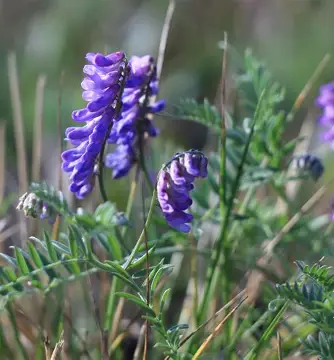
Hairy Vetch is valuable because it can serve two major roles at once: protecting the soil through the cool season and supplying biologically fixed nitrogen.
The plant typically grows relatively slowly during fall establishment, but its root system continues developing through winter. When temperatures warm, Hairy Vetch can accelerate quickly and produce large amounts of spring biomass. NRCS notes that this growth pattern helps make it an excellent nitrogen-source cover crop.
Hairy Vetch is an excellent option for:
- Winter cover crops
- Nitrogen-fixing rotations
- Green manure
- Soil-building systems
- Erosion control
- Crop rotations
- Multi-species cool-season blends
- Winter pasture and hay
Add Nitrogen Through a Legume Cover Crop
Hairy Vetch is one of the most widely recognized legumes for biological nitrogen fixation.
When properly inoculated and nodulated, it forms a symbiotic relationship with rhizobia bacteria that allows the plant to capture atmospheric nitrogen and incorporate it into plant tissue.
Texas A&M notes that legumes can provide nitrogen to forage systems and that Hairy Vetch is a useful legume option in Texas environments where site conditions are appropriate.
Benefits
- Fixes atmospheric nitrogen
- Produces nitrogen-rich biomass
- Helps improve nutrient cycling
- Adds organic material
- Reduces dependence on synthetic nitrogen in some rotations
- Complements cereal cover crops
- Excellent ahead of nitrogen-demanding crops
Build a Thick Spring Cover
Hairy Vetch is capable of producing substantial spring residue when allowed to develop before termination.
Research from Texas A&M AgriLife notes that Hairy Vetch can produce one-third to one-half more residue than common vetch, and that the resulting biomass can act as a natural mulch after termination. That residue can help conserve soil moisture and suppress weeds.
Benefits
- High spring biomass
- Helps suppress weeds
- Provides surface mulch
- Adds organic matter
- Helps reduce erosion
- Can help conserve soil moisture after termination
- Supports no-till and reduced-tillage systems
Why Choose Hairy Vetch Seed?
Winter-Hardy Legume
Hairy Vetch is more winter-hardy than many other annual legumes, making it useful where growers want a legume to survive through the cool season.
Excellent Nitrogen Source
NRCS identifies Hairy Vetch as an excellent nitrogen-source cover crop.
Strong Spring Growth
Although fall growth can be slow, established plants often produce rapid biomass once spring temperatures rise.
Weed Suppression
Dense vetch growth and terminated residue can help suppress competing vegetation.
Erosion Control
Living cover and trailing growth help protect soil from wind and water erosion through the cool season.
Pollinator Value
Hairy Vetch flowers attract pollinators and other beneficial insects, adding biodiversity to the system.
A Proven Cool-Season Legume
Hairy Vetch has a long history of use in Texas as a forage and soil-building crop.
Texas A&M reports that Hairy Vetch and common vetch have historically been grown for soil stabilization, green manure, winter pasture, and hay.
Texas A&M also identifies Hairy Vetch as a good option for some upland sites in Central Texas, though local adaptation, soil pH, and available moisture should always be considered.
For West Texas and the Southern Plains, Hairy Vetch can be useful where:
- Fall establishment moisture is available
- Winter survival is desired
- Spring nitrogen production is a priority
- A legume is needed in a small-grain-heavy rotation
- Producers want more residue and root diversity
NRCS trials in the Texas Rolling Red Plains found Hairy Vetch capable of producing strong biomass, including the highest biomass among tested legume species at the highest seeding rate in that study. NRCS cautioned that more testing is needed across northwest Texas and southern Oklahoma before generalizing those results.
Hairy Vetch Planting Recommendations
Hairy Vetch should be planted early enough in the fall to establish a root system before sustained cold weather.
General Planting Information
- Crop Type: Cool-season annual legume
- Scientific Name: Vicia villosa
- Primary Uses: Cover crop, green manure, forage, erosion control
- Planting Season: Late summer through fall
- Planting Depth: Approximately ¼–1 inch
- Planting Method: Drill, no-till drill, or broadcast with incorporation
- Inoculation: Use a compatible vetch/pea inoculant where needed
- Growth Habit: Spreading/vining
- Winter Survival: Good with adequate fall establishment
Iowa State recommends planting Hairy Vetch approximately ¼–1 inch deep, with moisture at planting being important for establishment.
Seeding Rate
Recommended rates vary by region and planting method.
Iowa State lists:
- Drilled: 10–15 lb./acre
- Overseeded: 20–30 lb./acre
Other Extension guidance lists somewhat higher rates, including:
- Single Species: 25–30 lb./acre
- Blend: 20–25 lb./acre
- Planting Depth: ½–1½ inches
Because recommendations vary this much, seeding rate should be adjusted to local conditions, seed quality, planting method, and whether Hairy Vetch is planted alone or in a blend.
Contact Jack Seed & Supply for a Hairy Vetch planting rate based on your acreage and cover crop goals.
What Does Hairy Vetch Bring to the Field?
Crop Type: Cool-season annual/biennial legume
Scientific Name: Vicia villosa
Primary Uses: Cover crop, green manure, erosion control, forage, hay
Growth Habit: Vining/spreading
Fall Growth: Slow to moderate
Spring Growth: Rapid
Nitrogen Fixation: Excellent
Biomass Production: Very Good
Weed Suppression: Good
Erosion Control: Good
Pollinator Value: Good
Winter Hardiness: Very Good compared with many annual legumes
Residue: Nitrogen-rich and relatively fast-decomposing compared with cereal residue
Potential to Reseed: Yes
Texas A&M notes that Hairy Vetch readily reseeds and can become a weed in small grains if allowed to produce seed.
What is Hairy Vetch?
Hairy Vetch is a cool-season annual or biennial legume used for nitrogen fixation, green manure, erosion control, cover crops, winter pasture, and hay.
Does Hairy Vetch fix nitrogen?
Yes. Hairy Vetch is a legume and can biologically fix atmospheric nitrogen when properly nodulated.
Is Hairy Vetch winter hardy?
Yes. Hairy Vetch is noted for stronger winter hardiness than many annual legumes and can overwinter successfully when it establishes well in the fall.
How much Hairy Vetch should I plant per acre?
Recommendations vary by location and planting method. Iowa State lists 10–15 lb./acre drilled and 20–30 lb./acre overseeded, while other Extension recommendations use higher rates. Local conditions should determine the final rate.
How deep should Hairy Vetch be planted?
A general range is approximately ¼ to 1 inch, with some regional recommendations extending deeper in certain soils.
Can Hairy Vetch be planted with wheat or rye?
Yes. Hairy Vetch is commonly mixed with cereal grains because grasses provide structure and fibrous roots while vetch contributes nitrogen fixation.
Can Hairy Vetch become a weed?
Yes. Texas A&M notes that it readily reseeds and may become a weed in small grains if allowed to mature seed.
Can cattle graze Hairy Vetch?
Yes, Hairy Vetch has forage value, but Texas A&M documents a rare but serious vetch poisoning syndrome in cattle and horses. Animals should be monitored carefully.

Reviews
There are no reviews yet.