Native Grass with a More Refined Turf Appearance
Buffalograss has long been valued for its ability to survive heat, drought, cold, and limited rainfall, but older cultivars don’t always provide the density and color homeowners expect from a conventional lawn.
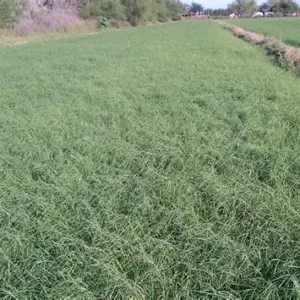
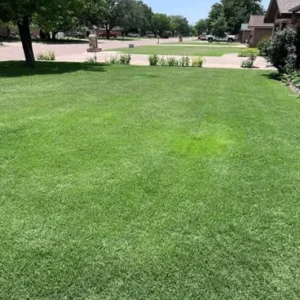
Sundancer was developed to improve those turf characteristics while retaining the low-input advantages of buffalograss.
Compared with older seeded cultivars, Sundancer has demonstrated improvements in:
- Establishment speed
- Turf density
- Dark green color
- Fine leaf texture
- Spring green-up
- Fall color retention
- Overall turf quality
That makes Sundancer particularly useful where the goal is a good-looking lawn that still uses considerably fewer resources than traditional high-input turf.
Get Buffalograss Established More Quickly
Slow establishment is one of the common concerns with traditional buffalograss.
Sundancer was specifically selected for strong seedling vigor and rapid lateral spread, allowing it to develop coverage faster than many older seeded buffalograss varieties.
Under favorable planting conditions, good irrigation, and proper weed management, Sundancer can begin developing substantial turf coverage during its first growing season.
Faster Establishment Helps With:
- Quicker ground coverage
- Reduced bare soil
- Better competition with weeds
- Faster lawn development
- More uniform turf
- Establishment of larger landscape areas
Good establishment still depends heavily on warm soil, adequate moisture, shallow seed placement, and weed control.
A Lawn Designed for Limited Water
Sundancer retains one of the characteristics that makes buffalograss so valuable: exceptional drought tolerance.
Buffalograss is native to the Great Plains and naturally adapted to periods of limited rainfall. Rather than requiring constant irrigation to survive summer conditions, established plants can slow growth during drought and respond again when moisture becomes available.
Drought-Tolerance Benefits
- Reduced irrigation demand
- Excellent summer survival
- Lower landscape water use
- Good performance in dry climates
- Ability to survive periods of water restriction
- Strong fit for West Texas
Sundancer still needs consistent moisture during germination and establishment. Its low-water advantage becomes much greater after the turf is fully established.
Key Features
Fast Establishment from Seed
Sundancer has excellent seedling vigor and lateral spread, helping it establish more quickly than many older seeded buffalograss cultivars.
Dark Green Color
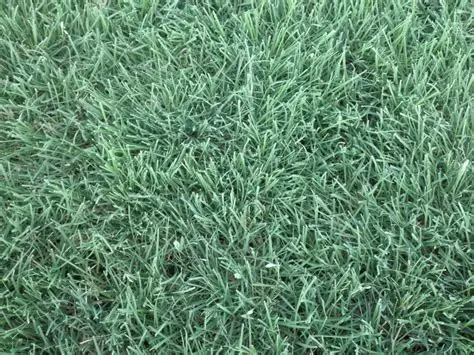
Sundancer was selected for a darker green appearance that gives it a more refined turf look during active growth.
Enhanced Turf Density
Improved canopy density helps Sundancer create a thicker and more uniform lawn.
Fine Leaf Texture
Its finer leaf texture gives established Sundancer a cleaner appearance than many traditional native grass plantings.
Exceptional Drought Tolerance
Sundancer maintains the naturally strong drought tolerance associated with buffalograss.
Low Water Requirements
Once established, Sundancer requires substantially less supplemental irrigation than many conventional lawn grasses.
Early Spring Green-Up
Sundancer was selected for improved spring green-up, helping it transition from winter dormancy into active growth.
Good Fall Color Retention
It can maintain active color later into the growing season before winter dormancy.
Improved Disease & Insect Resistance
Sundancer has shown improved performance against disease and insect pressure compared with older seeded buffalograss varieties.
Broad Adaptation
Sundancer has performed well across diverse growing environments, including trials throughout the Great Plains, Southwest, and other regions.
Premium Native Turf for Dry High Plains Conditions
Sundancer is particularly attractive for West Texas lawns and landscapes because its strengths align closely with the region’s growing conditions.
West Texas commonly presents challenges such as:
- Limited rainfall
- High summer temperatures
- Periodic drought
- Water restrictions
- High irrigation costs
- Wind
- Intense sunlight
- Cold winter temperatures
Buffalograss evolved under similar Great Plains conditions.
Sundancer adds improved turf characteristics to that natural adaptation, making it a strong option for:
- Residential lawns
- Ranch homes
- Commercial properties
- Parks
- Large landscapes
- Low-water developments
- Medians
- Recreational areas
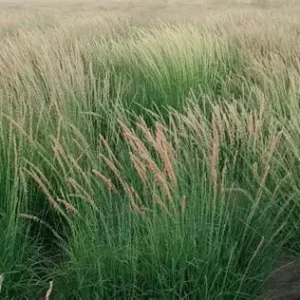
- Naturalized turf
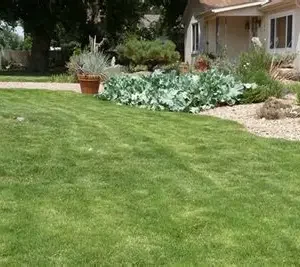
For homeowners wanting a low-water lawn without giving up a maintained turf appearance, Sundancer is one of the strongest buffalograss options.
Establish During Warm Growing Conditions
Sundancer is a warm-season grass and establishes best once soils have warmed.
General Planting Information
Crop: Buffalograss
Cultivar: Sundancer
Scientific Name: Bouteloua dactyloides
Crop Type: Warm-season perennial native grass
Primary Use: Turf and ground cover
Establishment: Seed
Planting Season: Spring through early summer
Soil Temperature: Approximately 60°F or warmer and rising
Sun Requirement: Full sun
Preferred Direct Sun: Approximately 6–8+ hours daily
Growth Habit: Low-growing and stolon-forming
Typical Height: Approximately 4–8 inches unmanaged
Planting Depth: Approximately ¼–½ inch maximum
Sundancer should be planted into a firm seedbed. Small buffalograss seed should not be buried deeply.
Plant Enough Seed for the Desired Establishment Speed
For new turf where relatively rapid first-year coverage is desired:
Recommended Turf Rate
2–3 lb. per 1,000 sq. ft.
A rate around 3 lb. per 1,000 sq. ft. is commonly recommended when the goal is strong first-season turf establishment.
Lower rates can also produce good turf, but establishment and complete coverage may take longer.
Seeding Rate Depends On:
- Desired establishment speed
- Seed quality
- Germination
- Seedbed preparation
- Irrigation availability
- Broadcast vs. drill establishment
- Size of the planting
Use the current seed tag and Jack Seed & Supply’s recommendation when determining the final rate for your project.
What Does Sundancer Bring to the Landscape?
Crop: Buffalograss
Cultivar: Sundancer
Scientific Name: Bouteloua dactyloides
Crop Type: Warm-season perennial native grass
Primary Use: Premium low-maintenance turf
Establishment: Seeded
Growth Habit: Low-growing, stolon-forming
Typical Height: Approximately 4–8 inches
Leaf Texture: Fine
Color: Dark green during active growth
Turf Density: Excellent
Establishment Speed: Fast for buffalograss
Drought Tolerance: Excellent
Heat Tolerance: Excellent
Cold Tolerance: Excellent
Water Requirement: Low once established
Fertility Requirement: Low
Mowing Requirement: Low
Disease & Insect Resistance: Improved
Spring Green-Up: Early for buffalograss
Fall Color Retention: Very Good
Sun Requirement: Full sun preferred
West Texas Adaptation: Excellent
Life Cycle: Perennial
What is Sundancer Buffalograss?
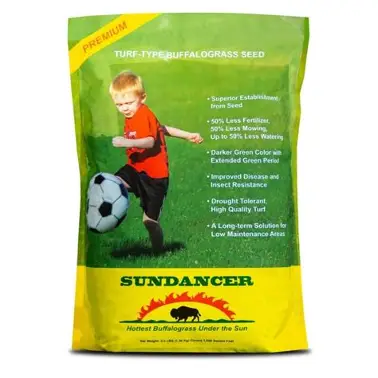
Sundancer is an improved seeded buffalograss developed through cooperation between the University of Nebraska–Lincoln and Native Turf Group for superior turf quality and faster establishment.
Is Sundancer good for West Texas?
Yes. Its exceptional drought tolerance, low water use, heat tolerance, and Great Plains adaptation make it a strong option for West Texas lawns.
Is Sundancer drought tolerant?
Yes. Exceptional drought tolerance is one of its primary strengths.
How much Sundancer should I plant?
Approximately 2–3 lb. per 1,000 square feet is commonly recommended for turf establishment, with 3 lb. providing faster first-season coverage.
How deep should Sundancer be planted?
Approximately ¼–½ inch deep or shallower. Avoid burying buffalograss seed too deeply.
Does Sundancer need much water?
It requires consistent moisture during establishment but has very low water requirements once mature.
Is Sundancer good for lawns?
Yes. Sundancer was specifically developed as an improved turf-type buffalograss.
Does Sundancer grow in shade?
It performs best with 6–8 hours or more of direct sunlight. Although it has shown some improved performance in partial shade, it should still be treated primarily as a full-sun grass.
How tall does Sundancer grow?
Unmowed growth is generally around 4–8 inches, while maintained turf can typically be kept around 2–3 inches.
Does Sundancer require much fertilizer?
No. One of its advantages is relatively low fertility requirements.
Is Sundancer better than Texoka?
For maintained residential or commercial turf, Sundancer is generally the stronger choice because of its improved density, color, texture, and establishment. Texoka has more value for forage, conservation, and naturalized applications.
Does Sundancer stay green during winter?
No. Sundancer is a warm-season grass and enters dormancy following cold weather.

Reviews
There are no reviews yet.