One of the Fastest Turfgrasses to Establish from Seed
One of the biggest advantages of Perennial Ryegrass is its exceptionally rapid germination and establishment.
Under favorable soil temperatures and moisture, seed can begin germinating in approximately 5–10 days, allowing green coverage to develop much faster than slower-establishing grasses such as Kentucky Bluegrass or many fine fescues.
Fast Establishment Makes It Useful For:
- New lawns
- Overseeding
- Athletic fields
- High-traffic turf
- Lawn repair
- Golf courses
- Temporary winter color
- Cool-season turf mixtures
This rapid establishment also makes Perennial Ryegrass valuable as a companion species in mixtures where slower grasses need additional time to develop.
Dense, Attractive Cool-Season Turf
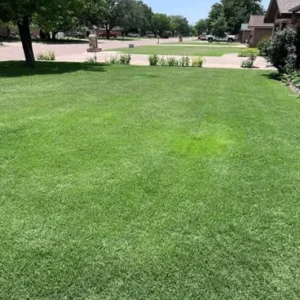
Modern turf-type Perennial Ryegrass can produce an attractive lawn with fine leaves, good density, and a rich green appearance.
It performs especially well when temperatures are moderate and adequate moisture is available.
Lawn Benefits
- Fine-textured appearance
- Dark to rich green color
- Rapid establishment
- Good traffic tolerance
- Clean mowing characteristics
- Excellent cool-season growth
- Easy establishment from seed
Perennial Ryegrass grows primarily as a bunchgrass, so it does not spread aggressively through stolons or rhizomes. Thin or damaged areas may require overseeding to restore full density.
Add Green Winter Color to Dormant Warm-Season Turf
One of the most useful applications for Perennial Ryegrass in Texas is winter overseeding.
Warm-season grasses such as Bermudagrass become dormant and lose their green color after cold weather arrives. Perennial Ryegrass can be seeded into the existing turf in fall to provide green coverage through much of the cool season.
Common Overseeding Uses
- Bermudagrass lawns
- Athletic fields
- Golf courses
- Commercial properties
- High-visibility landscapes
- Event areas
As temperatures warm in spring, management should shift toward encouraging the warm-season turf to resume active growth.
Key Features
Rapid Germination
Perennial Ryegrass can germinate in approximately 5–10 days under favorable conditions, making it one of the quickest turfgrasses to establish.
Fine Leaf Texture
Modern turf-type varieties produce narrow leaves that create an attractive, refined turf appearance.
Rich Green Color
Perennial Ryegrass is valued for its strong green color during cool growing conditions.
Excellent Wear Tolerance
Its ability to withstand traffic makes it useful for lawns, sports fields, and other frequently used turf.
Clean Mowing Quality
Perennial Ryegrass responds well to regular mowing and can produce a clean, manicured appearance.
Strong Cool-Season Growth
Growth is strongest during spring and fall when temperatures are moderate.
Excellent Overseeding Grass
Its quick germination and winter color make it one of the most widely used grasses for overseeding dormant warm-season turf.
Best Used with the Climate in Mind
Perennial Ryegrass can be very useful in West Texas, but it should be planted with an understanding of its cool-season growth habit.
West Texas summers can create difficult conditions because of:
- Extreme heat
- Low humidity
- High evaporation
- Drought
- Intense sunlight
- Limited rainfall
For that reason, Perennial Ryegrass may be better suited regionally for:
- Winter overseeding
- Fall and spring turf
- Irrigated lawns
- Protected landscapes
- Turf mixtures
- Athletic applications
For permanent full-sun lawns where low water use is the priority, warm-season grasses such as Bermudagrass or Buffalograss may be better adapted.
Plant During Cool Growing Conditions
Perennial Ryegrass establishes best when soil and air temperatures favor cool-season grass growth.
General Planting Information
Crop: Perennial Ryegrass
Scientific Name: Lolium perenne
Crop Type: Cool-season perennial grass
Primary Uses: Lawns, sports turf, overseeding, turf mixtures
Growth Habit: Bunchgrass
Preferred Planting Season: Fall or early spring
Sun Requirement: Full sun to partial shade
Planting Depth: Approximately ¼ inch
Germination: Approximately 5–10 days
Traffic Tolerance: Excellent
Heat Tolerance: Fair
Fall is generally the preferred establishment period because young plants have time to develop roots before summer heat arrives.
New Lawns & Overseeding
Seeding rates vary according to the application.
New Lawns
Approximately 5–10 lb. per 1,000 sq. ft.
Overseeding Existing Turf
Approximately 3–5 lb. per 1,000 sq. ft.
Winter Overseeding Bermudagrass
Approximately 8–15 lb. per 1,000 sq. ft. may be used when a dense winter turf canopy is desired.
Actual rates should be adjusted according to:
- Seed variety
- Germination percentage
- Turf use
- Desired density
- Existing turf
- Planting method
Use the current seed tag and Jack Seed & Supply’s recommendation when determining the final seeding rate for your project.
What Does Perennial Ryegrass Bring to the Lawn?
Crop: Perennial Ryegrass
Scientific Name: Lolium perenne
Crop Type: Cool-season perennial grass
Growth Habit: Bunchgrass
Primary Uses: Lawns, sports turf, winter overseeding, turf mixtures
Germination: Approximately 5–10 days
Establishment Speed: Excellent
Leaf Texture: Fine
Color: Rich Green
Traffic Tolerance: Excellent
Shade Tolerance: Moderate
Drought Tolerance: Fair to Moderate
Heat Tolerance: Fair
Cold Tolerance: Good
Water Requirement: Moderate
Fertility Requirement: Moderate
Planting Depth: Approximately ¼ inch
New Lawn Rate: Approximately 5–10 lb./1,000 sq. ft.
Overseeding Rate: Approximately 3–5 lb./1,000 sq. ft.
Winter Overseeding Rate: Approximately 8–15 lb./1,000 sq. ft.
Life Cycle: Perennial under suitable conditions
What is Perennial Ryegrass?
Perennial Ryegrass is a cool-season perennial turfgrass valued for fast germination, fine texture, green color, and excellent wear tolerance.
How quickly does Perennial Ryegrass germinate?
Under favorable conditions, germination can begin in approximately 5–10 days.
Is Perennial Ryegrass good for lawns?
Yes. It can produce attractive, fine-textured turf and is commonly used in lawns and turf mixtures.
Is Perennial Ryegrass good for West Texas?
It can be useful for winter overseeding, irrigated lawns, turf mixtures, and protected sites. Extreme summer heat can limit permanent stands in exposed locations.
Can Perennial Ryegrass be planted over Bermudagrass?
Yes. Winter overseeding of dormant Bermudagrass is one of its most common uses.
How much Perennial Ryegrass should I plant?
For new lawns, approximately 5–10 lb. per 1,000 sq. ft. is a useful general range. Rates vary for overseeding and specialized turf applications.
How deep should Perennial Ryegrass be planted?
Approximately ¼ inch.
Does Perennial Ryegrass tolerate traffic?
Yes. Excellent wear tolerance is one of its strongest characteristics.
Does Perennial Ryegrass tolerate shade?
It has moderate shade tolerance but is generally less shade tolerant than fine fescues.
Is Perennial Ryegrass drought tolerant?
It has some drought tolerance but requires more moisture than highly drought-adapted warm-season grasses such as Buffalograss or Bermudagrass.
Is Perennial Ryegrass the same as Annual Ryegrass?
No. Perennial Ryegrass is Lolium perenne, while Annual Ryegrass is generally Lolium multiflorum. They have different growth habits and primary uses.
Will Perennial Ryegrass survive the summer in West Texas?
It can struggle during prolonged periods of extreme heat, particularly in exposed full-sun areas. For this reason, it is often used regionally for cool-season turf and winter overseeding rather than as a stand-alone permanent lawn.

Reviews
There are no reviews yet.