Adapted to Dry Southern Plains Conditions
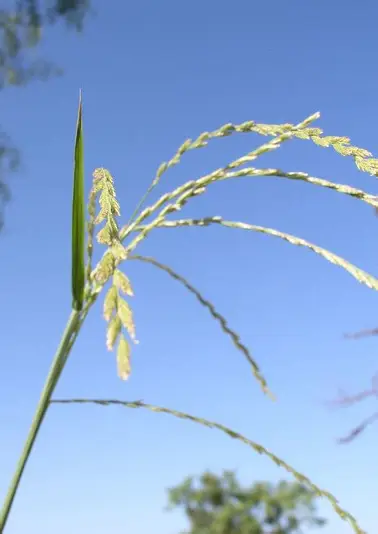
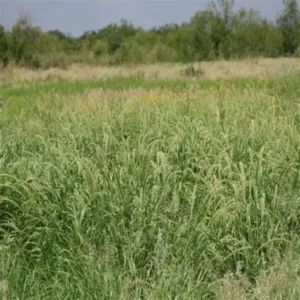
Green Sprangletop is a perennial bunchgrass native to the southern and southwestern United States.
It commonly grows in dry grasslands, open rangeland, rocky slopes, roadsides, and other well-drained sites.
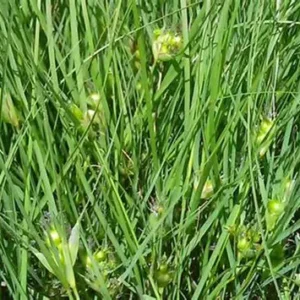
Rather than producing a dense sod like Buffalograss, Green Sprangletop grows in individual bunches, adding vertical structure and diversity to native stands.
Potential uses include:
- Native pasture
- Rangeland
- Reclamation
- Wildlife plantings
- Conservation acreage
- Erosion control
- Prairie restoration
- Custom native grass mixtures
Palatable Native Forage
Green Sprangletop is considered a good native forage grass and is readily grazed by livestock when young and actively growing.
Its leafy warm-season growth can contribute useful forage to mixed native pasture, particularly when combined with other adapted grasses that provide production at different times and under different moisture conditions.
Grazing Benefits
- Good livestock palatability
- Useful warm-season forage
- Native perennial production
- Good drought adaptation
- Works in mixed-species pasture
- Low-input management
- Provides additional forage diversity
Forage quality naturally declines as plants become mature and stemmy, so grazing management should focus on utilizing the grass during active vegetative growth.
A Natural Fit for Dry, Open Country
Green Sprangletop is well suited to the hot, dry conditions found across West Texas, the Southern High Plains, and the Southwest.
Its natural adaptation makes it useful on properties exposed to:
- High summer temperatures
- Limited rainfall
- Periodic drought
- Intense sunlight
- Wind
- Lower-input management
Potential West Texas applications include:
- Ranch pasture
- Native rangeland
- Reclamation projects
- Wildlife habitat
- Conservation acreage
- Roadside plantings
- Native grass mixtures
For landowners looking to establish diverse native vegetation rather than a single-species pasture, Green Sprangletop can be a valuable component.
Key Features
Native Warm-Season Perennial
Green Sprangletop is a perennial grass naturally adapted to warm growing conditions throughout Texas and the Southwest.
Good Grazing Value
Young, actively growing forage is palatable to livestock and can contribute useful warm-season grazing.
Strong Drought Adaptation
Once established, Green Sprangletop is capable of persisting under the dry conditions common throughout its native range.
Bunchgrass Growth
Plants develop in bunches rather than forming a dense sod, adding upright structure to native pasture and habitat plantings.
Broad Soil Adaptation
Green Sprangletop can occur on a variety of well-drained soils, including rocky and calcareous sites.
Native Blend Compatibility
It works particularly well as one component of a diverse mixture containing short-, mid-, and tall-growing native grasses.
Conservation Value
Its perennial root system and adaptation to difficult sites make it useful for reclamation and erosion-control projects.
Designed for Variable Rainfall
Green Sprangletop is naturally adapted to regions where rainfall can be both limited and unpredictable.
Once established, its perennial root system allows it to persist through dry periods and respond when favorable moisture returns.
Drought Adaptation Benefits
- Good dryland persistence
- Low supplemental water requirement
- Adapted to variable rainfall
- Useful for low-input acreage
- Strong fit for Southwestern conditions
Like all grasses, forage production decreases when moisture becomes limited. Drought tolerance refers primarily to the plant’s ability to survive and persist, not its ability to maintain maximum forage production without water.
Performs Across a Range of Well-Drained Sites
One of Green Sprangletop’s advantages is its ability to grow across several soil types and landscape positions.
It can be found on:
- Loams
- Clay loams
- Sandy loams
- Rocky soils
- Calcareous soils
- Limestone-influenced ground
- Well-drained uplands
It generally performs best in full sun with good drainage.
That flexibility makes Green Sprangletop useful in reclamation and native mixtures where soil conditions may vary across the same property.
Keep Native Grass Seed Shallow
Green Sprangletop should be planted into a firm seedbed with careful attention to planting depth.
General Planting Information
Crop: Green Sprangletop
Scientific Name: Leptochloa dubia
Crop Type: Warm-season perennial native grass
Growth Habit: Bunchgrass
Primary Uses: Grazing, reclamation, wildlife habitat, native pasture
Establishment: Seeded
Planting Season: Spring into early summer
Sun Requirement: Full sun
Water Requirement: Low once established
Planting Depth: Approximately ¼ inch or less
A native grass drill is generally preferred for larger acreage because it provides better control over seed placement.
Base the Rate on Pure Live Seed
Seeding rate depends on whether Green Sprangletop is being planted alone or as part of a native grass mixture.
A useful general pure-stand range is approximately:
- Drilled: 2–4 lb. PLS/acre
- Broadcast: Increase the drilled rate to account for less precise seed placement
In most native mixtures, the Green Sprangletop rate will be considerably lower because it represents only one portion of the total blend.
Final Rate Should Consider:
- Pure live seed
- Germination
- Seed purity
- Drill vs. broadcast
- Number of species in the blend
- Site conditions
- Desired stand composition
Use the current seed tag and Jack Seed & Supply’s recommendation when determining the final rate.
What Does Green Sprangletop Bring to the Field?
Crop: Green Sprangletop
Scientific Name: Leptochloa dubia
Crop Type: Warm-season perennial native grass
Growth Habit: Bunchgrass
Typical Height: Approximately 2–3 feet
Primary Uses: Native pasture, grazing, reclamation, erosion control, wildlife habitat
Forage Value: Good when actively growing
Wildlife Value: Good
Drought Tolerance: Very Good
Heat Tolerance: Excellent
Water Requirement: Low
Shade Tolerance: Low
Soil Adaptation: Broad on well-drained sites
Planting Depth: Approximately ¼ inch or less
Establishment: Seeded
Life Cycle: Perennial
West Texas Adaptation: Very Good
What is Green Sprangletop?
Green Sprangletop is a native warm-season perennial bunchgrass used for grazing, reclamation, conservation, wildlife habitat, and native grass mixtures.
Is Green Sprangletop native to Texas?
Yes. Green Sprangletop is native to Texas and other parts of the southern and southwestern United States.
Is Green Sprangletop good for cattle?
Yes. Young, actively growing Green Sprangletop provides palatable forage for cattle and other grazing livestock.
Is Green Sprangletop good for West Texas?
Yes. Its drought adaptation and ability to perform on dry, well-drained sites make it a useful native species for West Texas.
Is Green Sprangletop drought tolerant?
Yes. It has very good drought tolerance once established.
How tall does Green Sprangletop grow?
It commonly reaches approximately 2–3 feet tall, although height varies with moisture, soil, and growing conditions.
How deep should Green Sprangletop be planted?
Approximately ¼ inch or less. Shallow placement is important.
How much Green Sprangletop should I plant per acre?
A general pure-stand range is approximately 2–4 lb. PLS/acre, with rates adjusted for planting method and seed quality. Lower rates are typically used in mixtures.
Can Green Sprangletop be planted with Sideoats Grama?
Yes. The two can work well together in native pasture, reclamation, and wildlife mixtures.
Is Green Sprangletop a perennial?
Yes. It is a warm-season perennial grass.
Is Green Sprangletop good for wildlife?
Yes. Its bunchgrass growth provides cover and contributes additional plant diversity to native habitat.
Can Green Sprangletop be used for reclamation?
Yes. Reclamation and native restoration are among its useful applications, particularly when it is included in a diverse native seed mixture.

Reviews
There are no reviews yet.