Built Around the Strengths of Tall Fescue
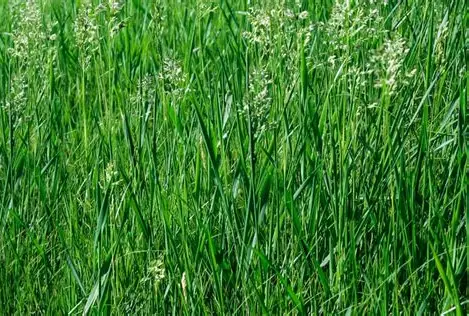
Unlike fine-fescue shade mixtures, Shady Place is built primarily around Turf-Type Tall Fescue.
Tall Fescue is useful in difficult lawn environments because it combines several desirable characteristics:
- Good shade tolerance
- Deep rooting
- Good heat tolerance
- Strong drought tolerance
- Durable turf
- Good traffic tolerance
- Adaptation to a range of soils
These characteristics are particularly valuable in West Texas, where a shaded lawn still has to contend with high summer temperatures and dry conditions.
More Genetic Diversity in One Lawn
Rather than relying on a single Tall Fescue variety, Shady Place combines several varieties.
That genetic diversity can help create a more adaptable turf stand because individual varieties may respond differently to:
- Heat
- Drought
- Disease pressure
- Shade
- Traffic
- Seasonal stress
- Changing soil conditions
For homeowners, that means the lawn isn’t depending entirely on one set of genetics to handle every condition.
Key Features
Primarily Tall Fescue
With 87% Tall Fescue, the blend takes advantage of the deep rooting and durability associated with Tall Fescue turf.
Good Shade Tolerance
Tall Fescue is one of the better cool-season options for lawns receiving reduced sunlight.
Deep Root System
Tall Fescue can develop a relatively deep root system, helping established turf access moisture deeper in the soil.
Good Drought Tolerance
Tall Fescue offers good drought tolerance for a cool-season turfgrass.
Heat Tolerance
Tall Fescue generally handles summer heat better than many other commonly planted cool-season lawn grasses.
Good Traffic Tolerance
Established Tall Fescue can withstand regular residential lawn use.
Kentucky Bluegrass Component
Kentucky Bluegrass adds additional turf diversity to the predominantly Tall Fescue mixture.
Versatile Lawn Use
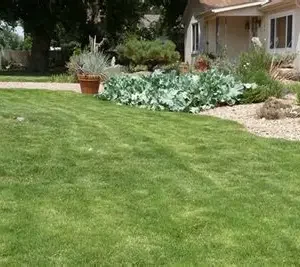
Shady Place can be used for new lawns, overseeding, thin turf, and difficult shaded areas.
Grow Grass Where Full-Sun Turf Struggles
One of the most common reasons lawns become thin is insufficient sunlight.
Areas beneath trees, beside buildings, and along north-facing walls can receive considerably less direct sunlight than the rest of the property.
Shady Place is designed for these more difficult areas.
Good Applications Include:
- Beneath open tree canopies
- North-facing lawns
- Areas beside homes
- Areas beside fences and walls
- Partially shaded backyards
- Commercial landscapes
- Thin areas in existing lawns
- Lawns with mixed sun and shade
No turfgrass can thrive without adequate light. Extremely dense shade may still require pruning, landscape modification, or a non-turf groundcover.
Establish During Cooler Growing Conditions
Tall Fescue and Kentucky Bluegrass are cool-season grasses and establish best when temperatures favor cool-season growth.
General Planting Information
Crop Type: Cool-season perennial turf blend
Primary Species: Tall Fescue
Primary Uses: Lawns, shade, overseeding, landscape turf
Growth Habit: Primarily bunch-type turf
Preferred Planting Season: Fall or early spring
Sun Requirement: Partial shade to sun
Shade Tolerance: Good to Very Good
Heat Tolerance: Good for cool-season turf
Drought Tolerance: Good
Planting Depth: Approximately ¼ inch
Fall is generally the preferred planting period because seedlings can establish during cooler weather before facing summer heat.
Establish a Dense, Uniform Lawn
Because this is predominantly a Tall Fescue mixture, a practical general range is:
New Lawns
8–10 lb. per 1,000 sq. ft.
Overseeding
4–6 lb. per 1,000 sq. ft.
Final rates should be adjusted according to:
- Current seed tag
- Germination percentage
- Existing turf density
- Seedbed condition
- Amount of shade
- Desired turf density
For extremely thin areas, rates toward the upper end of the range may provide better coverage.
What’s in Shady Place Blend?
Crop Type: Cool-season perennial turf mixture
Reflection Tall Fescue: 29%
PST-5BGR Tall Fescue: 29%
Extender Tall Fescue: 29%
Gaelic Kentucky Bluegrass: 9%
Primary Grass Type: Tall Fescue
Tall Fescue Content: 87%
Primary Uses: Shaded lawns, residential turf, overseeding, landscaping
Shade Tolerance: Good to Very Good
Heat Tolerance: Good for a cool-season turf
Drought Tolerance: Good
Traffic Tolerance: Good
Leaf Texture: Medium to Moderately Fine
Water Requirement: Moderate
Fertility Requirement: Moderate
Planting Depth: Approximately ¼ inch
New Lawn Rate: Approximately 8–10 lb./1,000 sq. ft.
Overseeding Rate: Approximately 4–6 lb./1,000 sq. ft.
Life Cycle: Perennial
What is Shady Place Blend?
Shady Place is a cool-season lawn seed mixture designed primarily for shaded and partially shaded areas.
Is Shady Place mostly Tall Fescue?
Yes. The mixture carried by Jack Seed & Supply contains 87% Tall Fescue, split between three varieties.
What’s in Shady Place Blend?
The listed mixture contains 29% Reflection Tall Fescue, 29% PST-5BGR Tall Fescue, 29% Extender Tall Fescue, and 9% Gaelic Kentucky Bluegrass.
Is Shady Place good under trees?
It can be a good option for areas receiving filtered or partial sunlight beneath trees. Extremely dense tree canopies may still provide too little light for healthy turf.
Is Shady Place good for West Texas?
Yes, particularly for irrigated lawns and protected or shaded areas where warm-season grasses such as Bermudagrass struggle.
Is Shady Place drought tolerant?
Tall Fescue provides good drought tolerance for a cool-season turfgrass, but supplemental irrigation is generally required to maintain green turf during hot, dry West Texas summers.
How much Shady Place should I plant?
A practical general range is approximately 8–10 lb. per 1,000 sq. ft. for a new lawn and 4–6 lb. per 1,000 sq. ft. for overseeding.
How deep should I plant it?
Approximately ¼ inch. Good seed-to-soil contact is more important than burying the seed deeply.
When should I plant Shady Place?
Fall is generally the best planting period, although early spring establishment is also possible.
Is Shady Place better than Bermudagrass for shade?
Yes. Tall Fescue has considerably better shade tolerance than Bermudagrass. Bermudagrass is better adapted to intense sun and summer heat.
Can I use Shady Place to overseed an existing Tall Fescue lawn?
Yes. It can be used to thicken compatible cool-season turf and repair thin or bare areas.

Reviews
There are no reviews yet.