Low-Input Turf for the Southern Plains
Buffalograss is native to the Great Plains and has evolved under conditions of heat, drought, wind, grazing, and limited rainfall.
That makes it fundamentally different from high-input turfgrasses that require frequent irrigation and mowing.
Topgun can be used for:
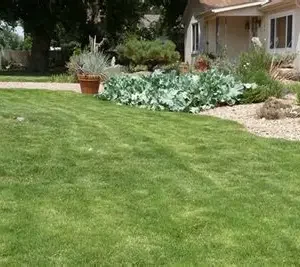
- Low-maintenance lawns
- Native landscapes
- Commercial landscapes
- Large-acreage ground cover
- Dryland turf
- Erosion control
- Wildlife-friendly landscapes
- Low-input properties
- Full-sun residential areas
For homeowners and landowners who want a grass that better matches West Texas conditions, buffalograss can significantly reduce irrigation and mowing demands.
A Strong Fit for Hot, Dry Landscapes
Texas A&M identifies buffalograss as one of the turfgrasses best adapted to Central and West Texas, particularly in locations receiving around 25 inches of annual rainfall or less.
That makes Topgun especially relevant for areas such as:
- Lubbock
- Amarillo
- The Texas Panhandle
- The South Plains
- Eastern New Mexico
- Oklahoma Panhandle
- Other dry Southern Plains communities
Buffalograss does particularly well where homeowners want a lawn that uses less water and requires less intensive maintenance than traditional bermudagrass or St. Augustine.
Reduce Irrigation Without Giving Up Ground Cover
One of Topgun Buffalograss’s biggest advantages is its ability to survive and perform with relatively limited water.
Buffalograss naturally evolved in the short-grass prairie and has exceptional drought tolerance.
Once established, it can:
- Survive extended dry periods
- Require less supplemental irrigation
- Recover when moisture returns
- Maintain usable ground cover under lower-input management
- Reduce total landscape water demand
Buffalograss can actually decline when overwatered, so more irrigation is not necessarily better.
For West Texas landscapes, that makes Topgun especially useful where water conservation is a priority.
Key Features
Seeded Cultivar
Topgun can be established from seed, making it practical for lawns, larger landscapes, native plantings, and erosion-control projects.
Native Warm-Season Grass
Buffalograss is native to the Great Plains and naturally adapted to hot summers, cold winters, and periodic drought.
Excellent Drought Tolerance
Buffalograss is among the most drought-tolerant turfgrasses available for Texas conditions.
Low Maintenance
Its short growth habit reduces mowing requirements compared with many conventional turfgrasses.
Low Water Use
Once established, Topgun can perform with substantially less supplemental irrigation than many traditional lawn grasses.
Strong Cold Tolerance
Buffalograss has excellent winter survival across much of the Great Plains and goes dormant during cold weather before greening again in spring.
Full-Sun Performance
Topgun performs best in open, sunny areas and is not a good option for heavily shaded landscapes.
Sod-Forming Growth
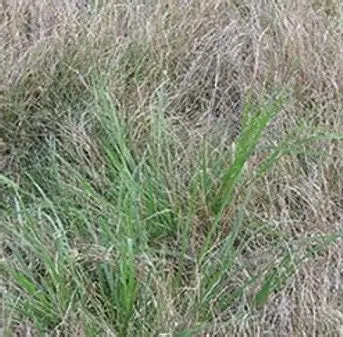
Buffalograss spreads by above-ground stolons to create a dense, low-growing turf.
Less Mowing, Less Water, Less Input
Topgun is an excellent option for landowners who want a more natural, low-maintenance lawn.
Buffalograss generally remains short and can often be maintained at a taller mowing height with much less frequent mowing than bermudagrass.
Low-Maintenance Benefits
- Reduced mowing frequency
- Lower irrigation requirements
- Lower fertilizer demand
- Less aggressive management
- Good natural drought survival
- Excellent fit for larger acreage
- Native prairie appearance
For very formal, heavily manicured lawns, another turfgrass may be more appropriate. Topgun’s strength is efficient, resilient turf with lower inputs.
Bring Short-Grass Prairie Character to Your Property
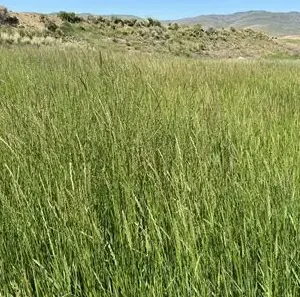
Buffalograss was once one of the dominant grasses across huge portions of the Great Plains.
Topgun allows homeowners and landowners to establish a turf that more closely resembles the native vegetation historically found across the region.
It can work especially well in:
- Native-style landscapes
- Ranch homes
- Large rural yards
- Commercial properties
- Low-water landscapes
- Wildlife-friendly properties
- Naturalized turf areas
During the growing season it forms green turf, then transitions to a golden-tan dormant color during winter.
Plant When Soils Are Warm
Topgun is a warm-season perennial grass and should be planted after soils have warmed enough to support germination.
General Planting Information
- Crop Type: Warm-season perennial grass
- Species: Buffalograss
- Scientific Name: Bouteloua dactyloides
- Cultivar: Topgun
- Primary Uses: Turf, native landscapes, ground cover, erosion control
- Establishment: Seeded
- Sun Requirement: Full sun
- Water Requirement: Low once established
- Growth Habit: Short, stolon-forming
- Best Region: Central and West Texas / Great Plains
Spring into early summer is generally the best establishment period once soil temperatures are consistently warm.
Match the Rate to the Size of the Planting
Seeding rates can vary depending on whether Topgun is being used for a small lawn or larger acreage.
A practical general range is:
Larger Acreage
- Drilled: approximately 15–20 lb./acre
- Broadcast: approximately 20–30 lb./acre
Small Turf Areas
- Approximately 2–4 lb. per 1,000 sq. ft.
Actual rates should be adjusted for:
- Seed coating
- Pure live seed
- Germination
- Broadcast vs. drill
- Seedbed quality
- Desired establishment speed
Use the current seed tag and Jack Seed & Supply’s recommendation for the specific lot being planted.
Give Small Seed Good Soil Contact
Buffalograss seed requires good seed-to-soil contact for successful establishment.
Establishment Tips
- Control existing vegetation first
- Prepare a firm seedbed
- Avoid loose or deeply tilled soil
- Plant shallow
- Maintain moisture during germination
- Avoid excessive irrigation
- Limit traffic during establishment
Seed should remain near the soil surface rather than being buried deeply.
A firm seedbed is especially important because small grass seedlings can struggle to emerge from deep or loose soil.
What Does Topgun Bring to the Landscape?
Crop: Buffalograss
Cultivar: Topgun
Scientific Name: Bouteloua dactyloides
Crop Type: Warm-season perennial native grass
Primary Uses: Turf, native landscaping, erosion control, ground cover
Establishment: Seeded
Growth Habit: Short, dense, stolon-forming
Typical Height: Approximately 4–6 inches unmanaged
Water Requirement: Low
Drought Tolerance: Excellent
Heat Tolerance: Excellent
Cold Tolerance: Excellent
Shade Tolerance: Poor
Traffic Tolerance: Moderate to Low
Mowing Requirement: Low
Fertilizer Requirement: Low
Soil Preference: Performs particularly well on neutral to alkaline soils
West Texas Adaptation: Excellent
Life Cycle: Perennial
What is Topgun Buffalograss?
Topgun is an improved seeded cultivar of native buffalograss used for low-maintenance lawns, native landscapes, erosion control, and other low-input plantings.
Is Topgun Buffalograss good for West Texas?
Yes. Buffalograss is especially well adapted to Central and West Texas and performs best in lower-rainfall regions.
Is Topgun drought tolerant?
Yes. Drought tolerance is one of buffalograss’s greatest strengths.
Does Topgun need much water?
Once established, Topgun requires substantially less irrigation than many conventional turfgrasses.
Can Topgun be planted from seed?
Yes. Topgun is a seeded buffalograss cultivar.
How much Topgun should I plant?
A practical range is approximately 15–20 lb./acre drilled, 20–30 lb./acre broadcast, or 2–4 lb. per 1,000 square feet for smaller areas.
Is Topgun good in shade?
No. Buffalograss performs best in full sun and has poor shade tolerance.
How tall does Topgun grow?
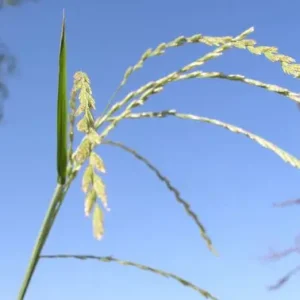
Buffalograss generally grows around 4–6 inches tall when unmanaged, though seed heads may extend higher.
Does Topgun require much mowing?
No. It is a naturally short-growing grass and requires much less mowing than many conventional lawn species.
Is Topgun good for a lawn?
Yes. It is particularly well suited to low-maintenance, low-water lawns in dry climates.
Can Topgun be used for pasture?
Buffalograss has historically provided forage for grazing animals and can contribute forage in native grass systems, but Topgun is generally more valuable as a low-growing turf and native ground-cover grass than as a high-yield hay or improved pasture species.
Does Topgun stay green all winter?
No. It is a warm-season grass and becomes dormant and tan after cold weather arrives.

Reviews
There are no reviews yet.