A Diverse Blend Built for Fall & Winter Production
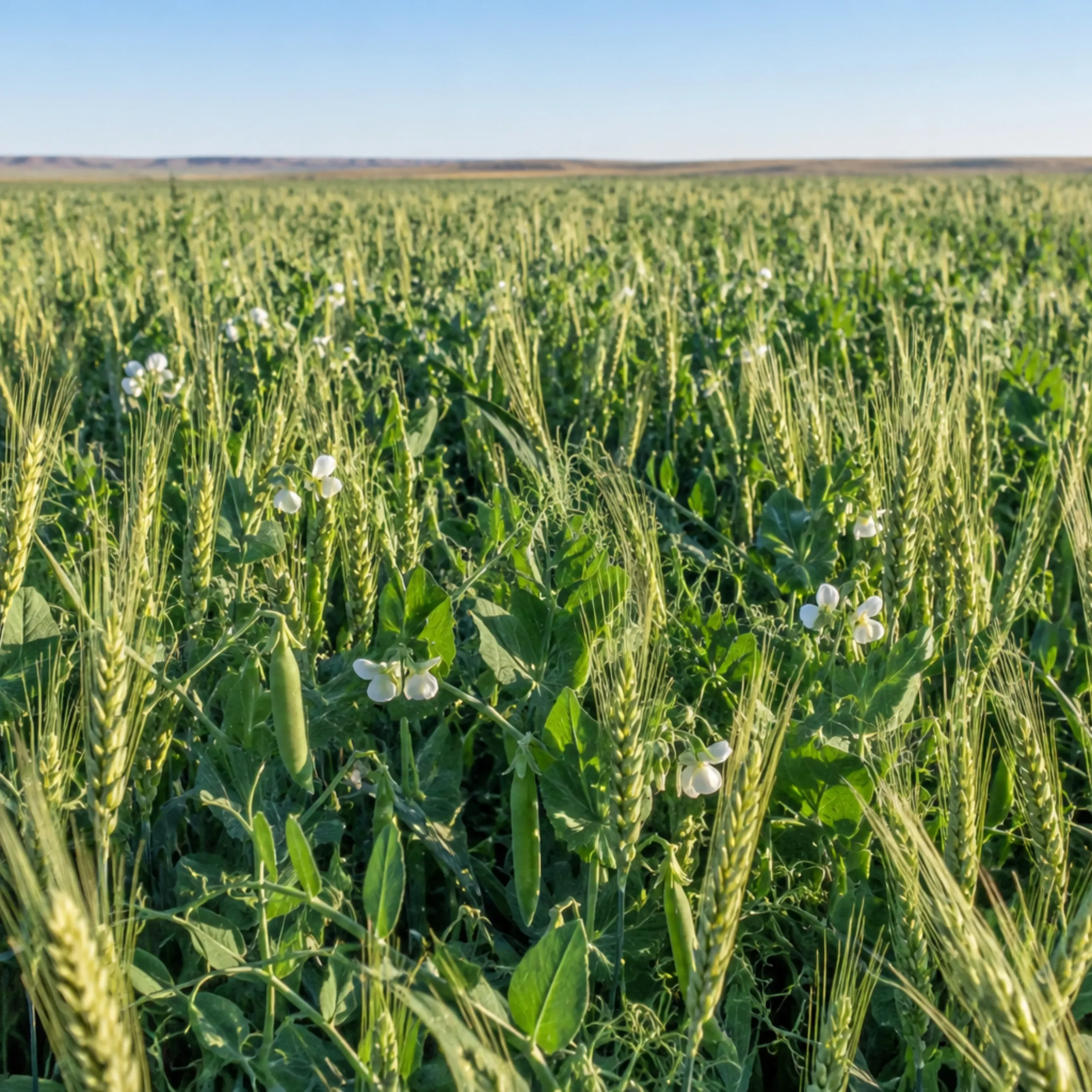
Fall Blend brings together three different crop types to create a more diverse cool-season stand than wheat alone. Each component fills a different role, giving producers a combination of forage production, grazing quality, ground cover, and soil-building potential.
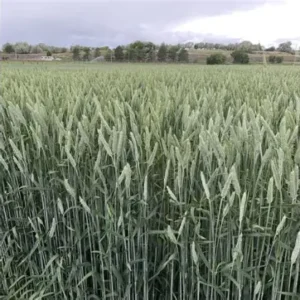
The 70% wheat portion forms the backbone of the blend. Wheat provides dependable establishment, tillering, winter forage, and spring growth while helping create a dense canopy that protects the soil.
Austrian winter peas make up 25% of the blend and add a cool-season legume to the stand. Peas provide highly palatable forage and, when effectively nodulated with the appropriate Rhizobium bacteria, can biologically fix atmospheric nitrogen.
The remaining 5% daikon radish adds a brassica with a large taproot and highly digestible top growth. Radish can help diversify rooting depth while providing another forage source for livestock.
More Than a Winter Grazing Mix
Fall Blend is designed to provide value both above and below ground. For livestock producers, wheat, winter peas, and radish create a diverse pasture with multiple forage types. For crop producers, those same species provide living cover and different root structures during the cool season.
Wheat develops a fibrous root system that helps hold soil in place. Austrian winter peas add a legume to the rotation, while daikon radish develops a taproot capable of exploring deeper portions of the soil profile.
This makes Fall Blend a useful option for producers who want winter forage without giving up the potential benefits of a diversified cover crop. Depending on the operation, it can be grazed through the cool season or managed primarily as a cover ahead of the next crop.
Blend & Agronomic Profile
Blend Name: Fall Blend
Crop Type: Cool-Season Forage & Cover Crop Blend
Composition: 70% Wheat / 25% Austrian Winter Peas / 5% Daikon Radish
Crop Diversity: Grass / Legume / Brassica
Primary Use: Grazing / Forage / Cover Crop
Planting Season: Late Summer to Fall
Growth Habit: Cool-Season Annual Blend
Forage Potential: Excellent
Grazing Potential: Excellent
Ground Cover: Excellent
Root Diversity: Excellent
Nitrogen Fixation Potential: Yes – Austrian Winter Peas
Soil-Building Potential: Very Good
Regional Fit: West Texas, Texas High Plains, Oklahoma Panhandle & Eastern New Mexico
Production System: Dryland or Irrigated
Performance will depend on planting date, moisture, fertility, soil conditions, temperature, grazing management, and winter severity. The relative abundance of each species in the established stand may also differ from its percentage by seed weight.
Recommended Planting
Fall Blend should be planted early enough for all three species to establish before prolonged cold weather. The ideal planting date will depend on whether the primary goal is fall grazing, winter cover, or spring forage.
Recommended Seeding Rate:
A practical starting point for a blend of this type is approximately 75–100 lb. per acre when drilled. Final rates should be adjusted for available moisture, planting date, germination, field conditions, and desired stand density.
Planting Depth:
Because the blend contains seed of substantially different sizes, planting depth requires some compromise. Generally target approximately 1–1½ inches when drilling the complete blend together. Avoid excessively deep placement, particularly for the smaller radish seed.
For Grazing:
Plant toward the earlier portion of the appropriate fall window when maximizing fall forage is important. Allow the stand to establish adequate roots and vegetative growth before beginning heavy grazing.
For Cover Crop Use:
Establish enough growth to provide meaningful soil cover and root development before winter. Termination timing should be selected according to the following cash crop and the producer’s moisture-management goals.
Fertility:
Use a current soil test whenever possible. Nitrogen management should consider residual soil nitrogen and the presence of Austrian winter peas. Excessive nitrogen can favor wheat growth and reduce the competitive contribution of the legume.
Inoculation:
Austrian winter peas should be properly inoculated with the appropriate pea/vetch Rhizobium inoculant when effective compatible bacteria are not already present in the field.
Fall Blend FAQ
What is in Fall Blend?
Fall Blend contains 70% wheat, 25% Austrian winter peas, and 5% daikon radish by seed weight.
What is Fall Blend used for?
Fall Blend is designed for cool-season grazing, forage production, ground cover, and cover cropping.
Is Fall Blend good for cattle grazing?
Yes. Wheat, Austrian winter peas, and daikon radish can all provide palatable forage for cattle when properly managed.
Why are Austrian winter peas included?
Austrian winter peas add a legume component that provides quality forage and can fix atmospheric nitrogen when properly inoculated and nodulated.
What does daikon radish add to the blend?
Daikon radish provides leafy forage above ground and develops a large taproot below ground, increasing plant and rooting diversity within the stand.
Is Fall Blend a cover crop?
Yes. Fall Blend can function as a cool-season cover crop in addition to providing livestock forage. Its three crop types provide living roots, ground cover, and greater plant diversity.
Can Fall Blend be planted dryland?
Yes, but stand density and production will depend heavily on stored soil moisture and seasonal precipitation. On moisture-limited West Texas acres, seeding rate and fertility should be matched to realistic moisture expectations.
How much Fall Blend should I plant per acre?
Approximately 75–100 lb. per acre drilled is a practical starting range. The final rate should be adjusted for field conditions, available moisture, planting date, and intended use.
How deep should Fall Blend be planted?
When drilling the complete mixture together, approximately 1–1½ inches is a reasonable target. Avoid planting too deeply because the smaller radish seed is less suited to deep placement.
When should I plant Fall Blend?
Fall Blend should generally be planted in late summer or fall. Earlier establishment is beneficial when fall grazing is a major goal, while exact timing should be adjusted to local moisture and temperature conditions.
Does Fall Blend produce nitrogen?
The Austrian winter peas can biologically fix atmospheric nitrogen when properly nodulated. The amount ultimately contributed to the system varies with pea growth, nodulation, soil fertility, moisture, and how the crop is managed.
Where can I buy Fall Blend seed?
Contact Jack Seed & Supply for Fall Blend availability and help developing a planting plan for grazing, forage, or cover crop use.

Reviews
There are no reviews yet.