Three Proven Crops for Game Birds
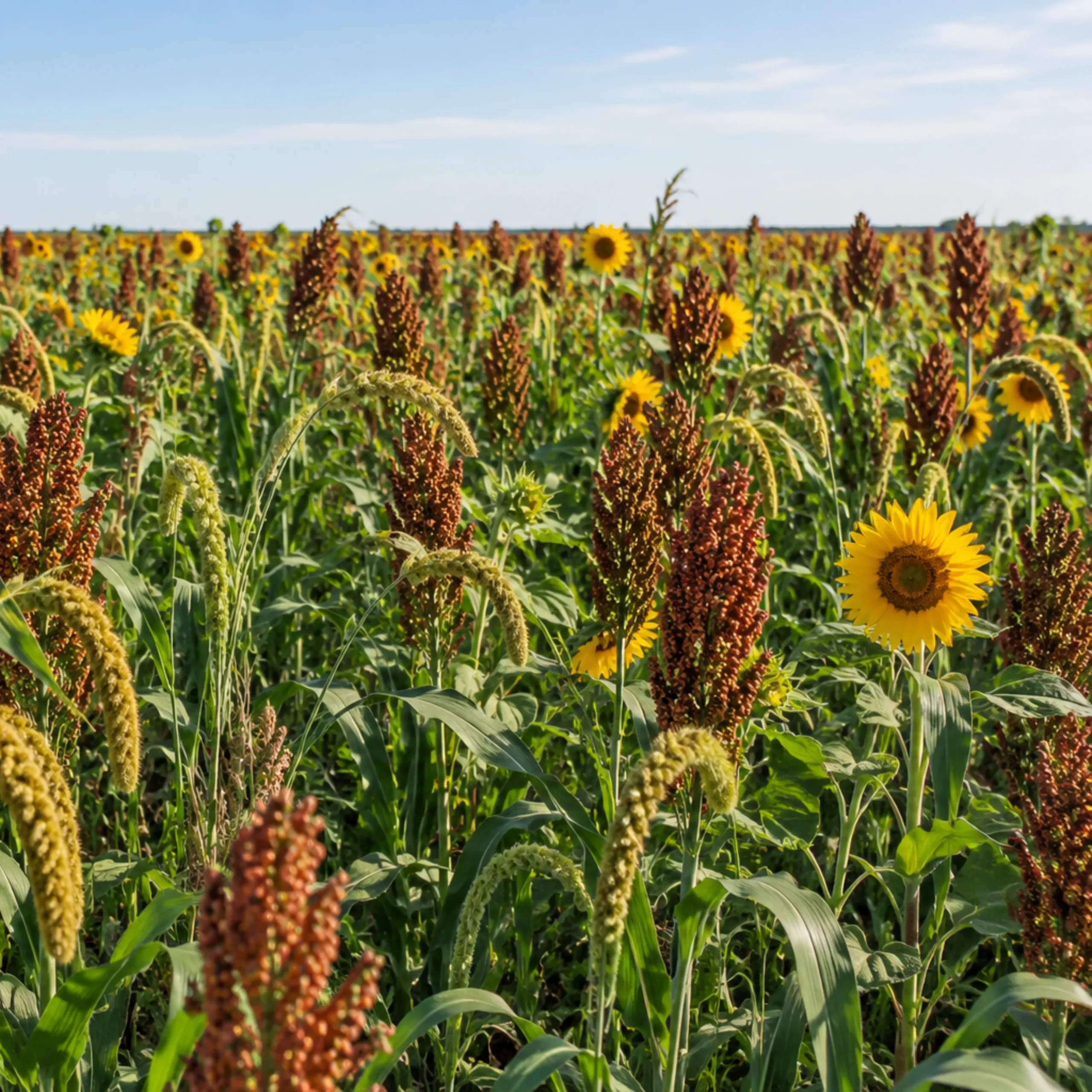
Bird Plot Blend brings together three of the most recognizable warm-season food-plot crops into one easy-to-plant mixture.
The 43% grain sorghum component provides the foundation of the blend. Sorghum produces grain-filled seed heads above the ground while also creating upright structure that can provide cover within the plot.
Millet makes up 30% of the blend and produces large numbers of relatively small seeds that are attractive to many seed-eating birds. Its rapid summer growth complements the taller sorghum and sunflower components.
The remaining 27% sunflower adds larger, energy-dense seed and a taller, broadleaf plant structure. Mature sunflower heads provide another food source while increasing the vertical diversity of the plot.
Together, the three crops create a food plot offering multiple seed types, varied plant structure, and season-long wildlife value.
Built for Dove, Quail & Upland Birds
Bird Plot Blend is designed primarily around seed production. Instead of relying on a single crop, the blend gives wildlife access to three different food sources as the plot matures.
Dove are readily attracted to areas where mature sunflower, millet, and grain sorghum seed is available, particularly when seed becomes accessible on relatively open ground.
For quail and other upland birds, the plot can provide both food and structural cover. Sorghum and sunflower create taller plants while millet fills portions of the lower canopy, producing a more diverse habitat than a single-species field.
Bird Plot Blend can be planted as a dedicated wildlife plot, along field edges, in corners, near habitat corridors, or in other areas managed specifically for wildlife.
Blend & Agronomic Profile
Blend Name: Bird Plot Blend
Crop Type: Warm-Season Wildlife Food Plot
Composition: 43% Grain Sorghum / 30% Millet / 27% Sunflower
Primary Use: Wildlife Food / Seed Production / Habitat
Planting Season: Spring to Early Summer
Growth Habit: Warm-Season Annual Blend
Seed Production Potential: Excellent
Wildlife Attraction: Excellent
Cover Potential: Very Good
Heat Tolerance: Excellent
Drought Adaptation: Good to Very Good
Plant Diversity: Grass / Cereal Grain / Broadleaf
Primary Wildlife: Dove / Quail / Pheasant / Turkey / Other Seed-Eating Birds
Regional Fit: West Texas, Texas High Plains, Oklahoma Panhandle & Eastern New Mexico
Production System: Dryland or Irrigated
Blend percentages are by seed weight. Because sunflower, grain sorghum, and millet have significantly different seed sizes, the number of plants established in the field will not occur in the same percentages as the mixture by weight.
Recommended Planting
Bird Plot Blend should be planted after the danger of frost has passed and soils have warmed enough for good germination and rapid establishment.
Recommended Seeding Rate:
Approximately 20–30 lb. per acre drilled is a practical starting range for a wildlife plot of this type. Final rates should be adjusted according to seed size, germination, planting method, available moisture, and desired stand density.
Avoid planting excessively thick. Wildlife plots benefit from enough plant spacing to allow individual sorghum and sunflower plants to develop productive seed heads.
Planting Depth:
When planting all three components together, approximately ½–1½ inches provides a practical range. Around 1 inch is a useful target where adequate moisture is available.
Planting Date:
Plant in spring or early summer once frost danger has passed and soil temperatures are warm. Planting date can also be adjusted according to when you want the plot to reach maturity and begin producing seed.
Site Selection:
Choose a location receiving adequate sunlight with reasonable soil drainage. Areas adjacent to existing wildlife cover can be particularly useful because birds can move between feeding and escape habitat.
Fertility:
Use a soil test where possible. Adequate fertility can improve plant growth and seed production, but inputs should be matched to available moisture and realistic wildlife-plot yield goals.
Bird Plot Blend FAQ
What is in Bird Plot Blend?
Bird Plot Blend contains 43% grain sorghum, 30% millet, and 27% sunflower by seed weight.
What birds is Bird Plot Blend designed for?
The blend is particularly useful for dove, quail, pheasant, turkey, and other seed-eating birds. Wildlife use will vary according to the surrounding habitat and local species.
Is Bird Plot Blend good for dove?
Yes. Sunflower, millet, and grain sorghum are all commonly used in wildlife plantings intended to provide food for dove.
Is Bird Plot Blend good for quail?
Yes. The blend can provide quail with seed as well as plant structure and cover. Its greatest value comes when the food plot is located near suitable nesting, loafing, and escape cover.
Why use three crops instead of just sunflower?
A blend provides several seed types and plant structures instead of relying on one crop. This can create a more diverse food source and habitat throughout the plot.
Does Bird Plot Blend provide cover?
Yes. Grain sorghum and sunflower provide taller vertical structure, while millet contributes growth lower in the canopy.
Can deer use Bird Plot Blend?
Deer may browse portions of the plot or consume mature seed, but Bird Plot Blend is primarily designed around birds and other seed-eating wildlife rather than as a dedicated deer forage blend.
When should Bird Plot Blend be planted?
Plant after frost danger has passed and soils have warmed. Spring through early summer is generally the appropriate window, with exact timing adjusted for local conditions and the desired maturity date.
How much Bird Plot Blend should I plant per acre?
Approximately 20–30 lb. per acre when drilled is a practical starting range. Adjust according to available moisture, germination, planting method, and desired stand density.
How deep should Bird Plot Blend be planted?
Approximately 1 inch deep is a practical target when planting the complete blend together. Avoid excessive depth, particularly for the smaller millet seed.
Can Bird Plot Blend be planted dryland?
Yes. Grain sorghum and millet are well suited to warm, relatively dry environments, but successful seed production still requires adequate soil moisture and timely rainfall.
Where should I plant a bird food plot?
Good locations include field edges, wildlife corridors, corners, dedicated food-plot areas, and locations close to existing escape or loafing cover. A food source is most useful when birds also have nearby water and suitable habitat.
Where can I buy Bird Plot Blend?
Contact Jack Seed & Supply for Bird Plot Blend availability and help planning a dove, quail, or general game-bird food plot.

Reviews
There are no reviews yet.