A Wildlife Blend Built Around Cover
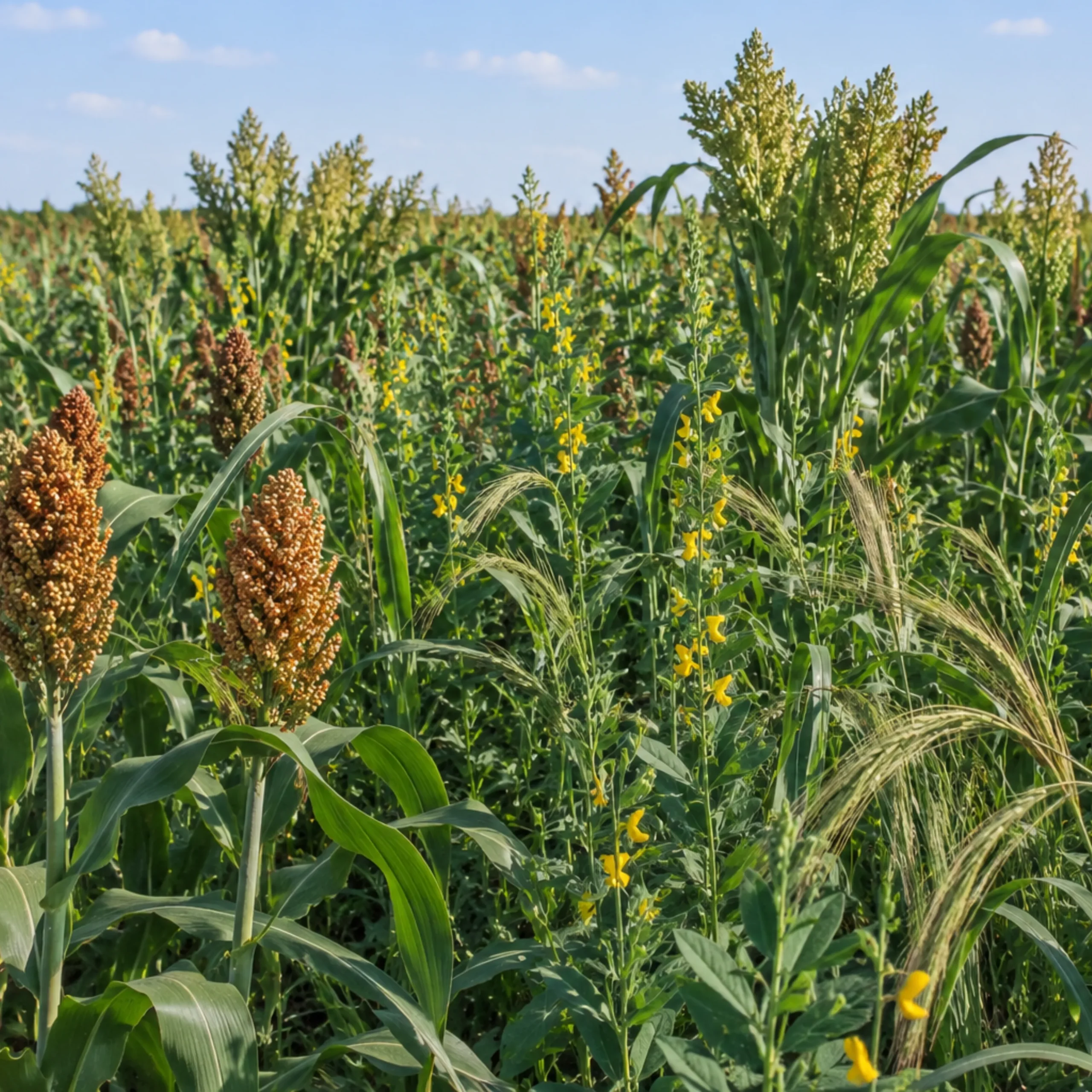
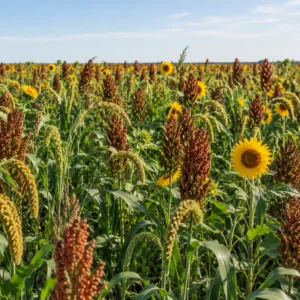
Wildlife Blend is designed differently from a traditional grain-focused bird plot. While food production is important, this mixture puts a major emphasis on height, biomass, cover, and habitat structure.
The largest component is 53% sorghum-sudangrass, a vigorous warm-season grass capable of producing tall, dense growth under favorable conditions. It forms much of the physical structure of the plot and can help create bedding areas, travel corridors, visual barriers, and screening cover.
Another 12% forage sorghum adds additional height and biomass, further developing the dense vertical structure that makes the blend useful for wildlife habitat.
The 14% grain sorghum portion adds a seed-producing component. As plants mature, grain-filled heads can provide an additional food source for birds and other wildlife.
Together, the three sorghum components establish the backbone of a plot built to provide both food and security cover.
Added Broadleaf Diversity for Deer & Wildlife
Wildlife Blend goes beyond sorghum by adding several warm-season broadleaf crops.
Sunn hemp makes up 10% of the blend and provides rapid summer growth, leafy vegetation, upright structure, and a warm-season legume component. Young sunn hemp can also be browsed by wildlife while adding additional biomass to the stand.
The remaining 11% miscellaneous component is made up of green beans, bush beans, and okra. These crops introduce another layer of plant diversity and create additional opportunities for wildlife browsing.
Beans provide tender broadleaf growth that can be attractive to deer and other browsing wildlife. Okra adds another tall broadleaf species with a different canopy structure and seed-producing pods.
The result is a plot with multiple plant heights, leaf types, seed sources, and growth habits rather than a uniform monoculture.
Blend & Agronomic Profile
Blend Name: Wildlife Blend
Crop Type: Warm-Season Wildlife Food Plot & Habitat Blend
Primary Use: Wildlife Habitat / Screening / Food / Browse / Cover
Planting Season: Spring to Early Summer
Growth Habit: Warm-Season Annual Blend
Cover Potential: Excellent
Screening Potential: Excellent
Biomass Potential: Excellent
Browse Potential: Very Good
Seed Production: Good
Plant Diversity: Excellent
Heat Tolerance: Excellent
Drought Adaptation: Good to Very Good
Primary Wildlife: Deer / Quail / Dove / Turkey / Pheasant / Other Wildlife
Regional Fit: West Texas, Texas High Plains, Oklahoma Panhandle & Eastern New Mexico
Production System: Dryland or Irrigated
Blend Composition
53% Sorghum-Sudangrass
14% Grain Sorghum
12% Forage Sorghum
10% Sunn Hemp
11% Miscellaneous – Green Beans, Bush Beans & Okra
Percentages are by seed weight. Because the individual crops have very different seed sizes, their percentage of established plants in the field will not necessarily match their percentage by weight in the bag.
Recommended Planting
Wildlife Blend should be planted after frost danger has passed and soil temperatures are warm enough for reliable germination of sorghum, sunn hemp, beans, and okra.
Recommended Seeding Rate:
Approximately 25–40 lb. per acre drilled is a practical starting range for a wildlife mixture of this type. Avoid unnecessarily heavy populations when tall, thick-stemmed screening cover is the primary goal.
Final rates should be adjusted for seed size, germination, available moisture, planting method, and desired stand density.
Planting Depth:
Because the blend contains seeds of different sizes, planting depth requires a compromise. Approximately ¾–1½ inches is a practical range when drilling the complete blend together.
Plant into adequate moisture whenever possible and prioritize good seed-to-soil contact.
Planting Date:
Plant in late spring through early summer after soils have warmed. Sunn hemp, beans, and okra are particularly warm-season oriented and perform best when planted into warm soils.
Site Selection:
Wildlife Blend works well in dedicated food plots, field borders, property edges, travel corridors, screening strips, and areas adjacent to existing bedding or escape cover.
Fertility:
Use a soil test when possible. Fertility should be matched to realistic production goals and available moisture rather than maximizing vegetative growth at the expense of stand health.
Wildlife Blend FAQ
What is in Wildlife Blend?
Wildlife Blend contains 53% sorghum-sudangrass, 14% grain sorghum, 12% forage sorghum, 10% sunn hemp, and 11% green beans, bush beans, and okra by seed weight.
What is Wildlife Blend designed for?
The blend is designed to provide a combination of wildlife cover, screening, browse, food, seed production, and habitat structure.
Is Wildlife Blend good for deer?
Yes. The tall sorghum components can provide security and screening cover, while beans and other broadleaf species add browse opportunities.
Is Wildlife Blend good for quail and game birds?
Yes. Grain sorghum can provide seed, while the overall stand creates additional habitat structure. Its value is greatest when combined with nearby native cover, water, and suitable nesting habitat.
How tall can Wildlife Blend grow?
Several components—including forage sorghum, sorghum-sudangrass, and sunn hemp—are capable of producing tall growth. Actual height will depend heavily on variety, population, moisture, fertility, and growing conditions.
Can Wildlife Blend be used as a screening plot?
Yes. Screening and visual cover are among the blend’s strongest potential uses because sorghum-sudangrass and forage sorghum can create a tall, dense stand.
Why are beans included?
Green and bush beans add broadleaf diversity and tender vegetation that can provide additional browse for deer and other wildlife.
Why is okra included?
Okra adds another warm-season broadleaf with a different plant structure. Its tall growth and seed pods increase the diversity of the plot.
Why is grain sorghum included?
Grain sorghum provides seed-filled heads that can serve as a food source for dove, quail, pheasant, turkey, and other wildlife after maturity.
What does sunn hemp add?
Sunn hemp adds rapid summer growth, broadleaf diversity, vertical structure, biomass, and biological nitrogen-fixation potential.
When should I plant Wildlife Blend?
Plant after frost danger has passed and soils are consistently warm. Late spring through early summer is generally the appropriate planting period.
How much Wildlife Blend should I plant per acre?
Approximately 25–40 lb. per acre drilled is a practical starting range. Final rates should be adjusted according to available moisture, planting method, germination, and desired plot density.
Can Wildlife Blend be planted dryland?
Yes. Many of the sorghum components have good heat and drought adaptation, but significant biomass and height still require adequate moisture. Dryland expectations should be adjusted according to stored soil moisture and seasonal rainfall.
Where can I buy Wildlife Blend?
Contact Jack Seed & Supply for Wildlife Blend availability and help planning a food plot, screening strip, or wildlife habitat planting.
Reviews
There are no reviews yet.