Productive Winter Forage for Livestock Operations
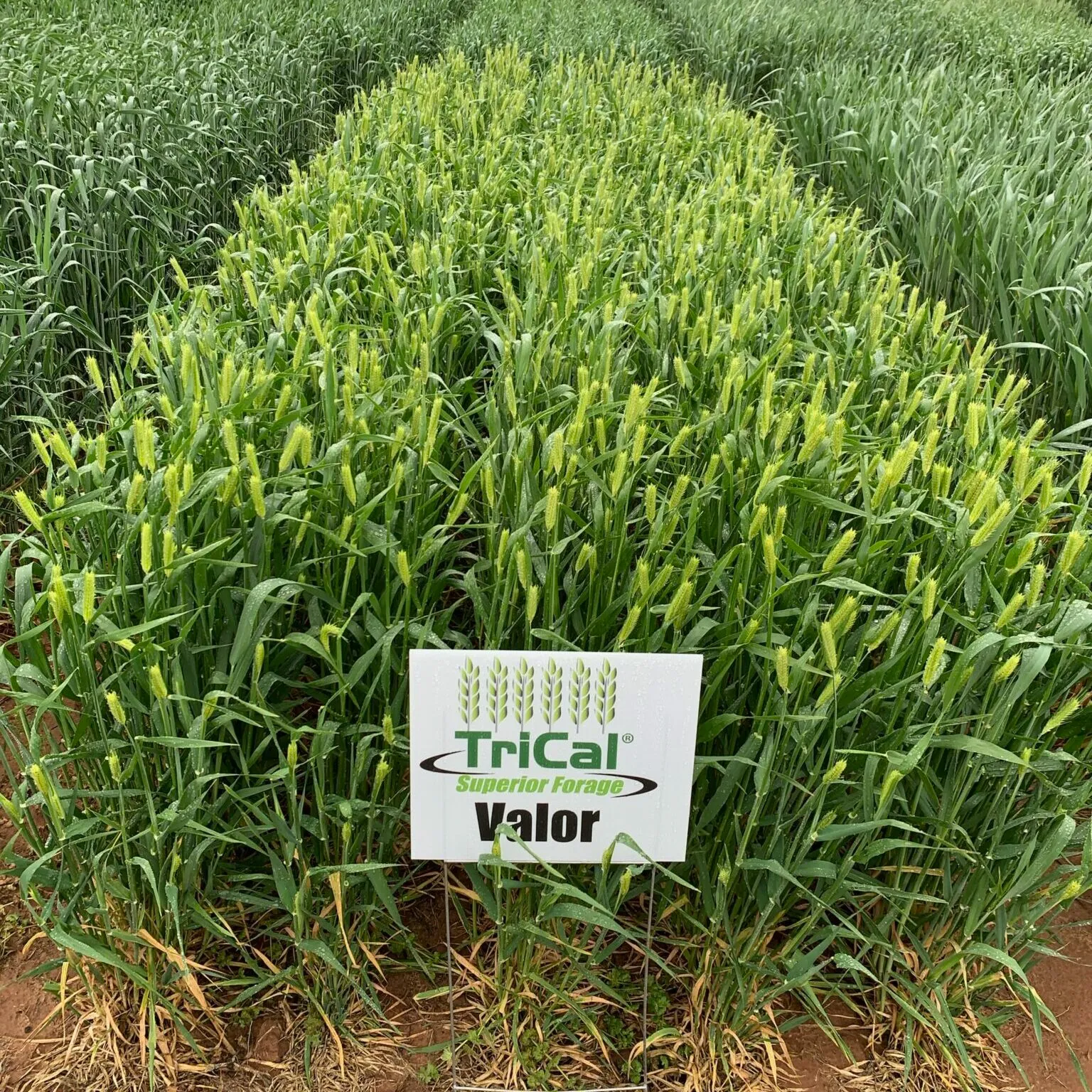
Valor is a winter barley with the combination of early growth, winter hardiness, and forage production needed for livestock-focused acres. It establishes quickly and produces aggressive spring growth, helping growers generate useful cool-season biomass ahead of many later-maturing small grains. Published descriptions identify Valor as an early-maturing, high-yielding six-row feed barley with very good standability.
For West Texas producers, this gives Valor several potential uses. It can be planted as a stand-alone winter forage, incorporated into a small-grain forage mixture, grazed, harvested for forage, or carried through for grain.
Valor’s winter hardiness is another important characteristic. Winter survival can be a limiting factor with barley compared with wheat or rye, making a winter-hardy variety particularly valuable where dependable spring regrowth is a priority.
Early Maturity with Flexible End Uses
One of Valor’s distinguishing characteristics is its early maturity. Published variety descriptions indicate that Valor can mature approximately two weeks earlier than wheat, providing growers with an opportunity to harvest forage or grain earlier in the spring.
That earlier maturity can be useful when a producer needs to transition quickly from winter forage into a warm-season crop. Valor can also be grazed or harvested in the spring before termination when used as a forage or cover crop.
Valor isn’t limited to forage production. It is a feed barley with high test-weight potential and can be harvested for grain for livestock feeding. Its flexibility allows growers to make management decisions based on forage needs, spring conditions, and the plans for the following crop.
Agronomic Profile
Crop Type: Winter Barley
Species: Hordeum vulgare
Row Type: Six-Row
Primary Use: Forage / Grazing / Haylage / Feed Grain
Growth Season: Fall-Planted Winter Annual
Establishment: Fast
Spring Growth: Aggressive
Maturity: Early
Plant Height: Approximately 3–5 ft. under suitable conditions
Winter Hardiness: Excellent
Standability: Very Good
Forage Potential: Excellent
Haylage Potential: Excellent
Grain Potential: Very Good
Test Weight: High
Powdery Mildew: Excellent Resistance
Leaf Rust: Excellent Resistance
Production System: Stand-Alone or Forage Mixture
Actual agronomic performance will vary with planting date, fertility, available moisture, temperature, soil type, and management. Published forage guidance describes Valor as widely adapted and tolerant of lower-fertility soils.
Recommended Planting
Valor should be fall planted early enough to establish a healthy stand and root system before winter. Planting date and population should be adjusted according to whether the crop will be used for grazing, harvested forage, grain, or as part of a mixture.
Forage & Grazing:
Planting earlier within the appropriate fall window can provide additional time for vegetative growth and increase fall forage availability. Maintain adequate fertility when significant forage production or grazing is expected.
Haylage & Harvested Forage:
Manage the crop for a thick, uniform stand. Harvest timing will determine the balance between forage quality and total tonnage, with earlier harvest generally favoring quality and later harvest increasing biomass.
Grain Production:
Valor can be carried through for feed grain. Manage fertility and plant population according to realistic grain yield expectations and available moisture.
Seeding Rate:
A commonly published guideline for Valor is approximately 100 lb. per acre when planted as a pure stand. Final rates should be adjusted for seed size, germination, planting method, moisture, and intended use.
Planting Depth:
Approximately 1 inch is a useful target when adequate moisture is available. Avoid unnecessarily deep planting and adjust placement according to soil conditions.
Forage Mixtures:
Valor can be combined with other cool-season forage crops such as wheat, triticale, winter rye, or forage peas to add diversity to a winter forage program.
Valor Barley FAQ
What is Valor Barley?
Valor is a six-row winter feed barley developed for forage and grain production. It is known for excellent winter hardiness, early maturity, strong standability, and productive forage growth.
Is Valor Barley good for West Texas?
Valor can be a strong option for West Texas forage systems where barley fits the operation. Texas A&M AgriLife has included Valor in statewide cool-season forage testing, including Texas dryland and limited-irrigation environments.
Is Valor a forage barley?
Yes. Valor is commonly used as a winter forage barley and can provide grazing or harvested forage in addition to its feed-grain potential.
Can cattle graze Valor Barley?
Yes. Valor can be used as a cool-season grazing crop for livestock. Grazing pressure should be managed to maintain adequate plant growth and stand health.
Can Valor Barley be used for haylage?
Yes. Published variety descriptions specifically note that Valor can produce excellent-quality haylage.
Is Valor Barley winter hardy?
Yes. Excellent winter hardiness is one of Valor’s primary characteristics.
How early does Valor Barley mature?
Valor is an early-maturing winter barley. Published seed information indicates that it can mature approximately two weeks earlier than wheat.
Can Valor be harvested for grain?
Yes. Valor is a feed barley and can be carried through grain harvest. The harvested grain can be used as a livestock feed ingredient where appropriate.
Can Valor be planted in a forage blend?
Yes. Valor can be planted alone or mixed with other winter annuals such as wheat, triticale, rye, and forage peas.
How much Valor Barley should I plant per acre?
Approximately 100 lb. per acre is a published pure-stand recommendation. The final seeding rate should be adjusted for germination, seed size, planting method, available moisture, and intended use.
Where can I buy Valor Barley seed?
Contact Jack Seed & Supply for Valor Barley seed availability and help determining whether Valor fits your grazing, forage, haylage, or feed-grain program.

Reviews
There are no reviews yet.