Forage, Nitrogen & Soil Improvement in One Crop
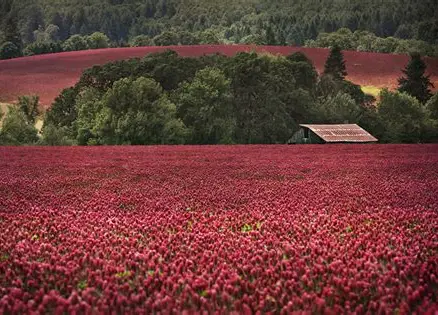
Red Clover can provide multiple benefits within a single planting. It produces quality forage for livestock while contributing biologically fixed nitrogen and building soil through both above-ground residue and an extensive root system.
NRCS describes Red Clover as easy to establish and notes that many producers use it in mixtures for livestock grazing. Its root system can permeate the soil, with the taproot capable of extending several feet under favorable conditions.
Red Clover is an excellent option for:
- Cool-season cover crops
- Livestock grazing
- Hay production
- Nitrogen-fixing rotations
- Green manure
- Pollinator habitat
- Soil-building programs
- Overseeding into existing stands
- Multi-species blends
Put a Clover to Work for Your Soil
One of Red Clover’s biggest advantages is its ability to fix atmospheric nitrogen.
When properly inoculated and nodulated, Red Clover works with rhizobia bacteria to convert atmospheric nitrogen into plant-available forms. USDA-NRCS gives Red Clover an excellent rating for nitrogen fixation.
Texas A&M emphasizes that clovers require the correct rhizobium relationship for effective nitrogen fixation and recommends confirming that seed has been properly inoculated when nitrogen contribution is a primary goal.
Benefits
- Fixes atmospheric nitrogen
- Produces nitrogen-rich biomass
- Helps improve nutrient cycling
- Adds organic matter
- Complements cereal crops
- Can reduce reliance on purchased nitrogen in some systems
- Adds a legume component to crop rotations
High-Quality Forage for Livestock
Red Clover is widely valued as livestock forage.
USDA-NRCS rates its grazing quality as very good and also rates it very good for mechanical forage harvest. This makes Red Clover useful for pasture, grazing mixtures, hay, and other forage systems.
Grazing Benefits
- Highly palatable forage
- Good protein contribution
- Works well with grasses
- Adds forage diversity
- Provides quality cool-season growth
- Useful for cattle and other grazing livestock
Red Clover is often more useful in a grass-legume mixture than as a pure stand because grasses provide additional fiber, stand structure, and more persistent residue.
Why Choose Red Clover Seed?
Excellent Nitrogen Fixer
USDA-NRCS gives Red Clover its highest rating for nitrogen fixation.
Very Good Grazing Quality
Red Clover produces palatable, nutrient-dense forage suitable for grazing systems.
Very Good Hay Potential
NRCS also rates Red Clover very good for mechanical forage harvest, making it useful for hay and forage production.
Extensive Root System
Its root system can spread extensively through the soil, and the taproot can penetrate several feet under favorable conditions.
Weed Suppression
Red Clover earns a good rating from NRCS for weed suppression, particularly when it establishes a dense canopy.
Pollinator Value
If allowed to flower, Red Clover provides excellent pollinator habitat.
Add Nitrogen & Root Diversity to the Rotation
Red Clover can fill the cool-season legume role in a cover crop system.
Its primary contribution is biological nitrogen fixation, but it also offers:
- Soil coverage
- Weed competition
- Root diversity
- Erosion protection
- Grazing value
- Biomass production
- Pollinator habitat
USDA-NRCS rates Red Clover good for nitrogen scavenging, weed suppression, compaction management, erosion control, and quick growth, while rating its nitrogen fixation excellent.
That combination makes Red Clover particularly useful when paired with cereal grains or other cover crop species.
Red Clover Planting Recommendations
Red Clover has small seed and should generally be planted shallow with good seed-to-soil contact.
General Planting Information
- Crop Type: Cool-season legume
- Scientific Name: Trifolium pratense
- Primary Uses: Cover crop, grazing, hay, nitrogen fixation
- Planting Depth: Approximately ¼–½ inch
- Seeds per Pound: Approximately 270,000
- Planting Methods: Drill, broadcast, aerial, interseed, or frost seed
- Inoculation: Recommended when nitrogen fixation is a major goal
USDA-NRCS lists a drilling depth of approximately ¼–½ inch and notes that Red Clover may also be frost-seeded.
Seeding Rate
The 2025 NRCS fact sheet lists:
- Drilled: 8 lb./acre PLS
- Broadcast: 10 lb./acre PLS
- Aerial: 12 lb./acre PLS
NRCS also notes that rates should be increased for forage or grazing use and that mixtures can improve cover crop performance.
These rates come from Midwest guidance and should not automatically be applied to every West Texas field.
Contact Jack Seed & Supply for a Red Clover seeding recommendation based on your acreage, moisture, planting method, and intended use.
What Does Red Clover Bring to the Field?
Crop Type: Cool-season legume
Scientific Name: Trifolium pratense
Growth Habit: Herbaceous clover
Primary Uses: Cover crop, grazing, hay, nitrogen fixation, pollinator habitat
Planting Depth: ¼–½ inch
Drilled Seeding Rate: 8 lb./acre PLS in NRCS Midwest guidance
Broadcast Seeding Rate: 10 lb./acre PLS
Seeds per Pound: Approximately 270,000
Nitrogen Fixation: Excellent
Grazing Quality: Very Good
Mechanical Forage Harvest: Very Good
Nitrogen Scavenging: Good
Weed Suppression: Good
Compaction Management: Good
Erosion Control: Good
Quick Growth: Good
Drought Tolerance: Fair
Shade Tolerance: Good
Pollinator Value: Excellent when allowed to flower
Typical Biomass: NRCS reports approximately 2,000–5,000 lb./acre/year under the conditions represented by its Iowa guidance.
What is Red Clover?
Red Clover is a cool-season legume used for grazing, hay, nitrogen fixation, cover crops, and pollinator habitat.
Does Red Clover fix nitrogen?
Yes. USDA-NRCS rates Red Clover as an excellent nitrogen fixer when properly nodulated.
Is Red Clover good for grazing?
Yes. NRCS rates its grazing quality very good.
Is Red Clover good for hay?
Yes. NRCS also rates Red Clover very good for mechanical forage harvest.
How much Red Clover should I plant per acre?
NRCS Midwest guidance lists approximately 8 lb./acre drilled, 10 lb./acre broadcast, and 12 lb./acre aerial, with higher rates recommended for forage or grazing. Local recommendations should take priority for West Texas.
How deep should Red Clover be planted?
Approximately ¼–½ inch deep is the NRCS recommendation for drilled seed.
Can Red Clover be frost-seeded?
Yes. USDA-NRCS specifically notes Red Clover may be frost-seeded.
Can Red Clover be planted with wheat?
Yes. Red Clover works well in mixtures with cereal grains, which add fibrous roots, stand structure, and additional forage.
Is Red Clover good for West Texas?
It can be used where moisture and soil conditions are suitable, but it is not one of the most naturally adapted dryland clovers for the High Plains. Texas A&M shows most clover production concentrated farther east and notes that perennial clovers often struggle under hot, dry Texas summers.
Can Red Clover cause bloat?
Yes. Like other lush legumes, Red Clover can contribute to bloat risk in grazing livestock.
Reviews
There are no reviews yet.