Grow More Leafy Forage Through the Cool Season
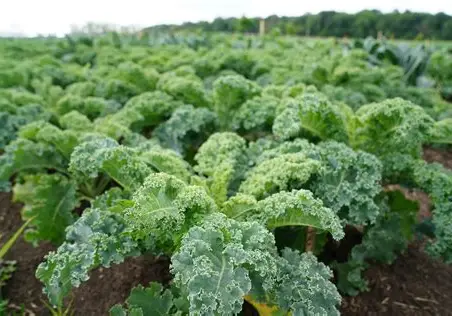
Forage kale is grown primarily for its large leaves and vegetative growth, making it different from root-focused brassicas such as Purple Top Turnips and forage radishes.
NRCS describes kale as a cool-season annual broadleaf that is best used in cover crop mixtures and rates its grazing quality as excellent. It is also noted for high protein and feed value and strong palatability for cattle and sheep.
Kale can be an excellent option for:
- Fall grazing
- Winter grazing
- Cattle forage
- Sheep forage
- Cool-season cover crops
- Multi-species forage blends
- Soil-health plantings
- Crop rotations
Leafy, Palatable Forage for Livestock
One of kale’s biggest advantages is the amount of high-quality leafy material it can provide.
NRCS reports that kale is high in protein and feed value and is very palatable to both sheep and cattle. Because much of its production is leafy vegetative material, livestock can utilize a high proportion of the standing plant.
Grazing Benefits
- Excellent grazing quality
- High-protein forage
- Highly palatable
- Produces abundant leafy growth
- Adds diversity to small-grain pasture
- Can extend cool-season grazing
- Works well with grasses and legumes
Kale is particularly useful as one component of a diverse grazing mixture rather than relying on brassicas as the entire livestock diet.
Why Choose Forage Kale Seed?
Excellent Grazing Quality
USDA-NRCS gives kale its highest rating for grazing quality and describes it as highly palatable to cattle and sheep.
High Feed Value
Kale can produce nutrient-dense leafy forage with high protein levels. The NRCS Cover Crop Chart lists crude protein potential around 30%, although actual forage analysis will vary considerably with maturity, fertility, environment, and management.
Rapid Growth
NRCS rates kale very good for quick growth, making it useful where producers need rapid cool-season vegetative production.
Excellent Weed Suppression
A dense kale canopy competes with weeds for light, water, nutrients, and growing space. NRCS rates kale’s weed-suppression ability as excellent.
Good Nitrogen Scavenger
Kale does not fix nitrogen, but it can capture available nitrogen from the soil and hold it in plant tissue. NRCS rates its nitrogen-scavenging ability as good.
Helps Fight Compaction
Kale develops a substantial root system, and NRCS rates its ability to help manage compaction as good.
Put Brassica Growth to Work for Your Soil
Kale isn’t only livestock forage. It can provide several useful functions in a cool-season cover crop.
Brassicas as a group are valued for rapid fall growth, biomass production, nutrient scavenging, and rooting characteristics. NRCS specifically identifies kale among the cool-season brassicas used for these purposes.
Cover Crop Benefits
- Rapid cool-season growth
- Nutrient scavenging
- Weed suppression
- Root diversity
- Surface soil coverage
- Added biomass
- Compaction management
- Livestock grazing potential
Because kale is a non-legume brassica, it does not biologically fix atmospheric nitrogen.
Instead, think of kale as a nitrogen catcher, while crops such as Winter Peas, Hairy Vetch, and clover serve as nitrogen fixers.
Add a Leafy Brassica to High Plains Fall Plantings
Kale is a cool-season crop, making it a useful candidate for fall plantings where producers want additional grazing or cover crop diversity.
Texas A&M documents commercial kale production in Texas and notes that the crop is planted in fall and harvested through winter and early spring in the state’s primary production regions. Texas A&M’s historical production data also includes kale acreage in the Texas Plains region.
For West Texas producers, kale can be considered alongside:
- Wheat
- Triticale
- Cereal Rye
- Oats
- Barley
- Winter Peas
- Hairy Vetch
- Clover
- Radish
- Purple Top Turnips
In dryland situations, available fall moisture should be considered carefully because NRCS rates kale’s drought tolerance only fair.
Kale Planting Recommendations
Kale is a small-seeded brassica and should generally be planted shallow into a firm seedbed with good seed-to-soil contact.
General Planting Information
- Crop Type: Cool-season annual broadleaf
- Crop Family: Brassica
- Primary Uses: Grazing and cover crops
- Planting Season: Late summer through fall
- Planting Depth: Approximately ¼–½ inch
- Growth Habit: Upright and spreading
- Nitrogen Fixation: None
- Nitrogen Scavenging: Good
- Grazing Quality: Excellent
- Drought Tolerance: Fair
The current NRCS Cover Crop Chart identifies kale as a cool-season annual broadleaf and recommends a seeding depth of approximately ¼–½ inch.
Seeding Rate
An NRCS technical guide lists a full seeding rate of approximately:
5 lb./acre for Collards or Kale
Rates should be reduced when kale is included in a multi-species mixture. Exact rates should account for the variety, seed size, germination, planting method, desired population, and number of other species in the blend.
Contact Jack Seed & Supply for a kale planting recommendation based on your acreage, planting method, and forage or cover crop goals.
What Does Kale Bring to the Field?
Crop Type: Cool-season annual broadleaf
Crop Family: Brassica
Common Cover Crop Classification: Brassica napus var. pabularia
Primary Uses: Grazing and cover crops
Planting Depth: Approximately ¼–½ inch
Full Seeding Rate: Approximately 5 lb./acre in NRCS guidance
Growth Habit: Upright and spreading
Grazing Quality: Excellent
Nitrogen Fixation: None
Nitrogen Scavenging: Good
Weed Suppression: Excellent
Compaction Management: Good
Growth Rate: Very Good
Drought Tolerance: Fair
Low-Fertility Tolerance: Poor
Mechanical Forage Harvest: Poor
Season: Cool season
NRCS considers kale particularly well suited to cover crop mixtures and livestock grazing.
Is kale good for cattle grazing?
Yes. USDA-NRCS rates kale’s grazing quality as excellent and describes it as high in protein, high in feed value, and very palatable to cattle and sheep.
Is kale a cover crop?
Yes. Kale is a cool-season annual broadleaf brassica that can be used for grazing, weed suppression, nutrient scavenging, and additional crop diversity.
How much kale seed should I plant per acre?
An NRCS technical guide lists approximately 5 lb./acre as a full seeding rate for kale or collards. Rates should generally be reduced when kale is planted in a mixture.
How deep should kale seed be planted?
Approximately ¼–½ inch is the range listed in the NRCS Cover Crop Chart.
Does kale fix nitrogen?
No. Kale is a brassica, not a legume. It does not biologically fix atmospheric nitrogen. It instead acts as a nutrient scavenger, capturing nutrients already available in the soil.
Can kale be planted with wheat?
Yes. Kale can be an excellent addition to wheat and other small-grain mixtures. The grain contributes fibrous roots and fiber-rich forage while kale adds leafy brassica forage and another rooting type.
Is kale drought tolerant?
Only moderately. NRCS rates kale’s drought tolerance as fair, which is an important consideration for dryland West Texas acres.
Is kale better than turnips for grazing?
It depends on the goal. Kale is particularly strong for leafy forage production, while turnips produce both edible leaves and a large storage root. Including both can add more diversity to a grazing blend.
Reviews
There are no reviews yet.